
_(1).png)
When people need a lawyer, they don’t start by making calls. They start with Google. A 2026 survey by Attorney Sluice found that 48% of people search online first when they need a lawyer, and 70% go online to get answers to legal questions.
Google plays a major role in choosing a law firm. A 2024 study by iLawyer Marketing found that 92% of people use Google as their primary source, and 85% of potential clients research lawyers online before reaching out.
Law firm SEO helps your practice appear in these searches at the right time. It attracts the right clients, builds trust early, and increases enquiries from people actively looking for legal help.
What Is Law Firm SEO?
Law firm SEO is the practice of improving your law firm’s visibility on search engines like Google and Bing so potential clients can easily find you. The main goal is to attract people who are actively searching for legal help and turn them into enquiries.
When your law firm ranks higher in search results, more people see your website, visit it, and contact you for legal help.
How To Create An SEO Strategy For a Law Firm
Law firm SEO helps your practice get found online, attract local clients, and generate consistent enquiries through search engines.
1. Start with Local SEO
Most people searching for a lawyer want help close to where they live or work. They usually search things like “solicitor near me” or “divorce lawyer in my area.”
Local SEO helps your law firm appear in these searches on Google Maps, local search results, and the Google 3-Pack (the top three law firms shown on the map).
This is important because many people call directly from these results without even visiting a website.
Optimise Your Google Business Profile (GBP)
Your Google Business Profile is one of the most important assets for law firm SEO.
Make sure your profile includes:
- Correct business name
- Accurate address and phone number
- Proper legal service categories
- A keyword-rich business description
- Updated office hours
- Real office and team photos
Use keywords naturally, such as family solicitor, employment lawyer, or personal injury solicitor, without overloading.
Create Location-Specific Service Pages on Your Website
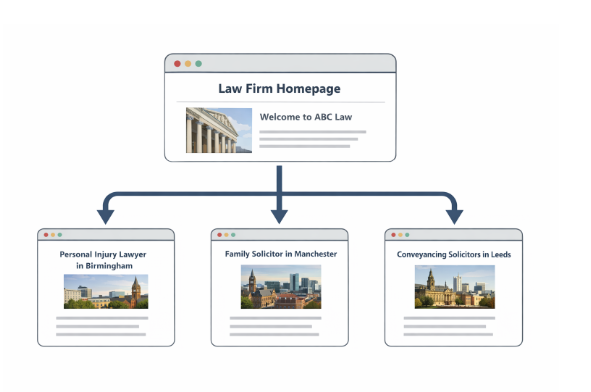
Google ranks pages that clearly match service + location searches. Instead of one general services page, create separate pages like:
- Personal Injury Lawyer in Birmingham
- Family Solicitor in Manchester
- Conveyancing Solicitors in Leeds
These pages help you rank for local legal searches and convert visitors better.
Source: ChatGPT
List Your Firm on Local Directories
Consistent listings strengthen local SEO signals. Make sure your firm is listed on:
- Bing Places
- Legal directories
- Local business directories
Get More Google Reviews
Reviews improve both trust and local rankings. Best practices are:
- Ask clients after a positive outcome
- Send review links via email or SMS
- Reply professionally to every review
- Thank clients for positive feedback
- Address negative reviews calmly
2. Build a High-Quality, SEO-Friendly Website
Your website is the first impression of your law firm. When someone visits your site, they quickly decide whether they trust you or not. Both Google and potential clients judge your firm based on how your website looks, works, and explains your services.
A good website does not need to be a fancy design. It needs to be clear, professional, and easy to use.
Highlight Your Unique Selling Point (USP)
Your homepage should clearly explain what you do and why someone should choose you. Visitors should understand this within a few seconds.
Your USP should answer three simple questions:
- Who do you help? (Individuals, families, businesses, employees, landlords, etc.)
- What legal services do you provide? (Family law, employment law, conveyancing, personal injury, etc.)
- Why should clients choose you? (Experience, fixed fees, fast response, specialist knowledge)
Example of a Clear USP
“Experienced employment solicitors helping UK employees protect their rights with clear advice and fixed fees.”
Showcase Social Proof
People looking for a lawyer want to feel sure they are making the right choice.
What to Include on Your Website
- Client testimonials: Short, real feedback from happy clients
- Google review snippets: Star ratings and short review quotes
- Awards and certifications: Any recognitions your firm has received
- Professional memberships: Law Society, or other legal bodies
- Media mentions: Any newspapers, blogs, or websites that featured your firm
Create Strong Attorney Bio Pages
People don’t just hire a law firm; they hire a lawyer. Attorney profile pages help clients feel confident about who they will be working with.
Strong bio pages also help with E-E-A-T (Experience, Expertise, Authority, Trust), which is very important for legal websites.
What Each Bio Page Should Include
- Professional photo
- Qualifications and education
- Years of experience
- Areas of practice
- Notable cases or achievements (where appropriate)
- Regulatory or professional details
Clear and honest profiles make your firm look transparent and trustworthy.
Make Your Website Mobile-Friendly
Most people search for lawyers on their mobile phones, often in urgent situations. If your website is difficult to use on mobile, visitors will leave and contact another firm.
Make Sure Your Website:
- Loads quickly
- Has readable text without zooming
- Uses buttons that are easy to tap
- Has simple contact forms that work smoothly
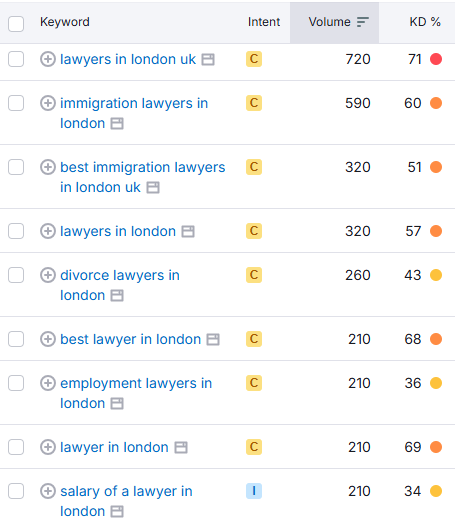
3. Do Local Keyword Research
Local keyword research helps you understand how real people search for legal help online. It shows the exact words and phrases clients use when they need a lawyer.
Choose keywords that clearly show what legal service someone wants and where they want it.
What Are Local Keywords?
Local keywords include:
- A legal service
- A location (city, town, or “near me”)
These keywords tell Google that the person is looking for a lawyer in a specific area.
Think of Local Search Phrases
Put yourself in the client’s place and think about what they would type into Google.
Common Examples
- “family law attorney near me”
- “employment solicitor Bristol”
These searches clearly show:
- What service does the person need
- Where they want the service
Because of this, local keywords often bring high-quality leads who are ready to contact a law firm.
How to Find Keywords Using Tools
You don’t need to be technical to do keyword research. Simple tools can help you find ideas.
Helpful Tools
- Google Keyword Planner: Free and beginner-friendly
- Semrush: Shows popular searches and competition
- Ahrefs: Helps find keywords your competitors use
What Keywords Should You Focus On?
Choose keywords that have:
- Clear legal intent: The search clearly shows the person needs a lawyer
- Local relevance: The keyword includes a city, area, or “near me”
- Manageable competition: Avoid very competitive keywords at the beginning
Example of Keywords
|
Practice Area |
Location |
Target Keyword |
|
Family Law |
London |
Family solicitor London |
|
Employment Law |
Leeds |
Employment lawyer Leeds |
|
Conveyancing |
Birmingham |
Conveyancing solicitor Birmingham |
Each keyword can be used to create a separate service page on your website.
4. Perform On-Page SEO
On-page SEO means making each page on your website clear, helpful, and easy to understand for both Google and visitors. When your pages are well organised and answer real questions, Google can rank them better, and users are more likely to contact you.
You don’t need technical knowledge for this. It is mainly about clear writing and proper page structure.
Optimise Title Tags and Meta Descriptions
The title tag is the main heading shown in Google search results. The meta description is the short summary under the title.
Every important page should include:
- Your main service
- Your location
Use Keywords Naturally in Content
Keywords should appear naturally, not forced.
Where to Use Keywords
- H1 heading (main page heading)
Example: Employment Solicitors in Bristol - Subheadings (H2 and H3)
Use related terms to explain different sections - Body content
Mention keywords naturally while explaining your service
The most important rule is: Write for people first, not search engines.
If your content sounds clear and helpful to a client, Google will also understand it better.
Cover Topics Completely
A strong legal service page should answer all common client questions in one place.
What Your Page Should Explain
- What the service involves: Explain the legal process in simple words
- Who the service is for: Individuals, families, employees, businesses, etc.
- Costs and timelines: Give a general idea of fees and how long things take
- Common questions: Answer doubts clients usually have
- Next steps: Explain how to contact you or book a consultation
When people find all answers on one page, they trust your firm more and are more likely to contact you.
5. Build Backlinks with Local Link Building
Backlinks are links from other websites to your law firm’s website. Google sees these links as votes of trust. When trusted websites link to you, Google believes your firm is reliable and worth showing in search results.
The key thing to remember is: Quality is more important than quantity.
A few good links from trusted sites are far better than many weak ones.
Why Backlinks are Important for Law Firms
- They help Google trust your website
- They improve search rankings
- They increase visibility online
- They bring referral traffic from other sites
For law firms, links from relevant and reputable sources are especially valuable.
Digital PR and Media Mentions
Digital PR means getting your law firm mentioned online by trusted websites, journalists, or publications.
Simple Ways to Do This
- Legal commentary for journalists: Share your legal opinion on current news or legal changes. Journalists often link back to your website.
- Press releases for major cases or updates: If your firm handles a notable case or launches a new service, media sites may mention and link to you.
- Guest articles on legal or business websites: Write helpful articles explaining legal topics. These usually include a link back to your firm.
Even one strong link from a news site or a respected legal website can greatly improve your authority.
Competitor Backlink Research
A simple way to find link opportunities is to see where your competitors are getting links from.
What to Look For
- Legal directories
- Industry blogs
- Local business websites
- News and media sites
If a website links to your competitor, it may also be willing to link to your firm, especially if your content is useful or better.
How to Earn Similar Links
- List your firm on the same legal directories
- Offer better or more updated content
- Reach out politely and professionally
- Share helpful legal information, not promotions
Conclusion - Law Firm SEO
SEO is one of the best ways for law firms to appear at the top of search results. But for many firms, handling SEO in-house isn’t always the most effective option.
In these cases, outsourcing SEO to a trusted agency can be the best solution. Look for a partner that can help your firm grow and maintain strong results over the long term.
At WOWinfotech, we have years of experience providing SEO for law firms. We create custom SEO strategies that match your business goals and carefully track and optimise campaigns to get the best results.
If you want to attract more leads to your website, get in touch with us today.
Frequently Asked Questions
Contact us to get a digital strategy
Contact us for digital strategy guidance.