Performance marketing is a type of digital advertising where businesses pay only when a specific, measurable action happens, such as a click, lead, or sale. It does not guarantee actual results, but it focuses on outcomes that can be tracked and measured, which helps increase accuracy, though success is not certain.
Platforms like social media and search engines are where these ads are run, not tools themselves. This approach makes it possible to see exactly which ads perform best and to optimise spending for the strongest possible results.
Performance marketing helps businesses spend their budget more wisely, aiming for transparency and measurable value with every campaign.
What is Performance Marketing?
Performance marketing is a digital advertising strategy where businesses pay only when a specific, measurable action occurs, such as a sale, a click, or a lead. Rather than guaranteeing actual business results, it provides measurable outcomes that can be tracked and analysed, helping marketers understand campaign effectiveness and optimise spending.
With old-style ads, you pay upfront before seeing any results. Performance marketing lets you set a budget and pay only when someone clicks or buys. You can choose how much to spend on each action, such as setting your ad budget to pay £1 per click.
You can stop or change your campaigns at any time based on their performance. This makes it easier to control costs, optimise spending, and focus budgets on what works best, helping businesses advertise more effectively.
Types of Performance Marketing Channels
Performance marketing uses various online channels to target audiences and pay only for results. Here are some key types of performance marketing channels:
-
Social Media Marketing
Social media platforms like Facebook, Instagram, LinkedIn and Pinterest allow advertisers to run targeted campaigns. You can reach specific groups by age, location, interests, and behaviours.
Example: For example, Meta Ads let a fashion brand reach users interested in clothing by targeting their interests, behaviours, age, and location. LinkedIn Ads are ideal for B2B companies because they allow precise targeting by job title, industry, company size, and professional interests.
-
Search Engine Marketing (SEM)
Search Engine Marketing involves paid advertisements on search engines such as Google and Bing. Advertisers bid on keywords relevant to their products or services.
Example: A local plumber running Google Ads that show at the top of search results for “emergency plumbing service” and pays only when someone clicks.
-
Affiliate Marketing
In affiliate marketing, businesses work with partners (affiliates) who promote their products for a commission on each sale or lead generated.
Example: Bloggers and influencers sharing unique affiliate links for tech gadgets, earning a commission on any sales through their links.
-
Native Advertising
Native marketing integrates ads naturally into the look and feel of the platform, making them less intrusive. These ads appear as part of the content, such as sponsored articles or recommended stories.
Example: Content recommendations on news websites that promote products or services relevant to the reader’s interests.
-
Email Marketing
Sending emails directly to people with special offers or useful info makes them more likely to buy something or sign up.
Example: Amazon sends personalised product recommendations based on your browsing and buying history to nurture leads and close sales.
-
Display Advertising
Display ads use images, videos, or banners across websites and apps to grab attention and lead users to take specific actions.
Example: A travel company showing banner ads for holiday packages on travel blogs or news sites.
-
Mobile Advertising
Mobile-specific ads target users on smartphones or tablets through apps or mobile websites.
Example: Gaming companies running ads within apps that link users to download or buy in-game items.
-
Interactive Marketing
Interactive Marketing involves engaging users with quizzes, polls, games, or virtual try-ons that encourage interaction and increase conversions.
Example: Beauty brands offering augmented reality apps that allow users to try makeup virtually before buying, like MyGlamm.
Each type offers unique ways to connect with audiences and track performance closely. Combining several channels often results in the most effective performance marketing campaigns.
How Performance Marketing Works
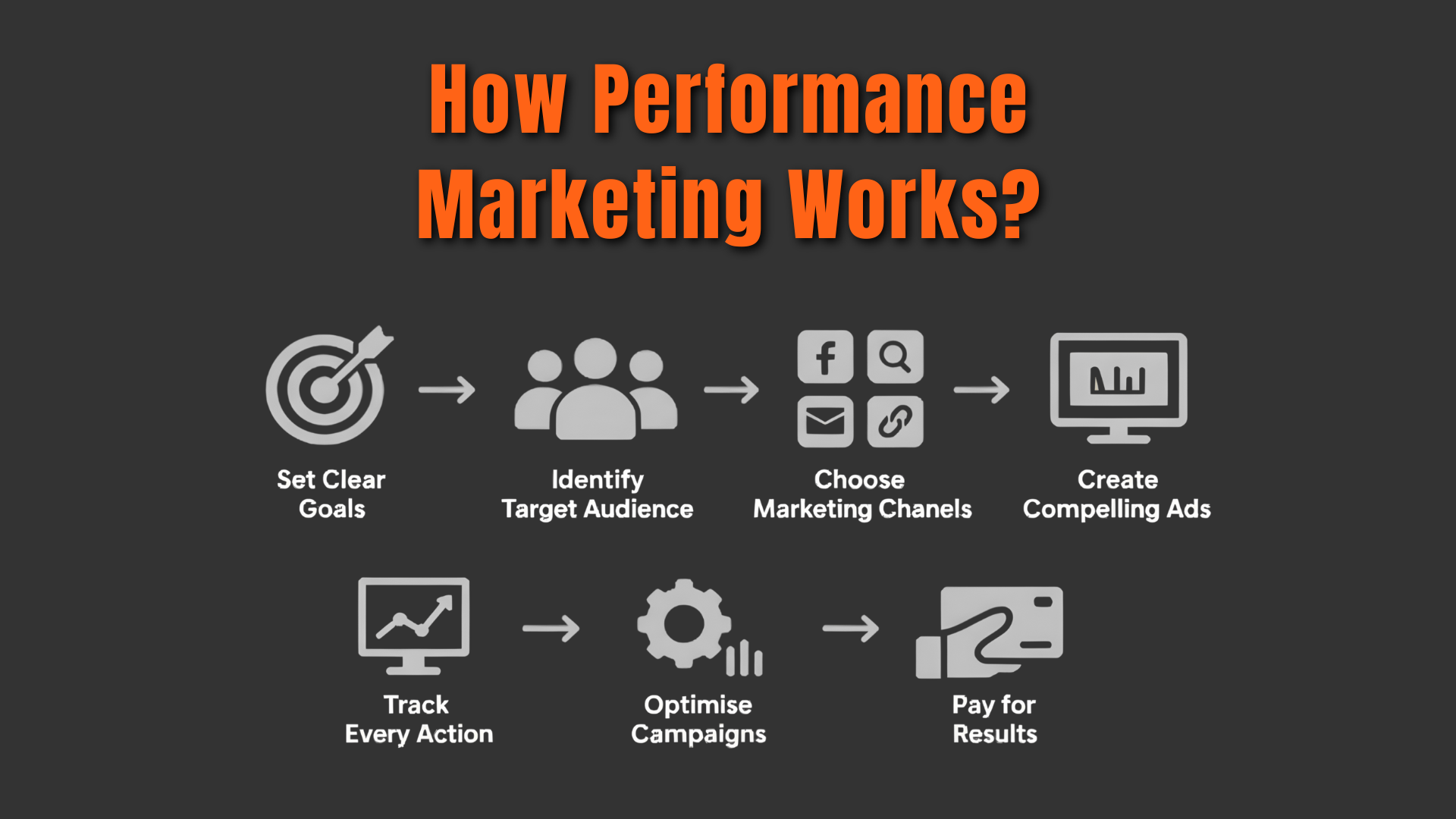
Performance marketing is a pay-for-results approach to digital advertising. Here’s how it works step-by-step:
- Set Clear Goals: Businesses begin by defining what action they want from their audience. This could be a click, a lead, a sale, or an app download. Clear goals guide the whole campaign.
- Identify Target Audience: Marketers research and segment the audience who are most likely to respond. Customising ads to specific groups improves chances of success.
- Choose Marketing Channels: Ads run on platforms such as social media, search engines, affiliates, or email to reach the chosen audience.
- Create Compelling Ads: Attractive and relevant ad content encourages users to take the desired action.
- Track Every Action: Using tracking tools, marketers measure clicks, leads, or sales in real time to see what works.
- Optimise Campaigns: Data from tracking helps marketers adjust ads and budgets quickly to increase results and reduce waste.
- Pay for Results: Advertisers set a budget, and as the ad runs, money is deducted whenever users click or take the set action.
This process allows businesses to control their marketing spend, focus on results, and improve return on investment by continuously refining their campaigns.
Performance-Based Marketing KPIs
In performance marketing, tracking the right Key Performance Indicators (KPIs) is important to measuring success. Here are the most important KPIs to focus on:
- Cost per Click (CPC): Amount paid for each click
- Cost per Acquisition (CPA): Cost for each sale or lead
- Return on Ad Spend (ROAS): Revenue earned money spent
- Conversion Rate: Percentage of visitors completing the desired action
Tracking these metrics helps you understand which campaigns deliver the best value and where to invest more.
Benefits of Performance Marketing
Performance marketing offers many advantages that help businesses grow efficiently and effectively. Here are some key benefits:
|
Benefit |
Description |
|
Cost Efficiency |
Pay only for Measurable results, reducing wasted marketing spend. |
|
Accountability |
Clear tracking and reporting of performance builds trust. |
|
Flexibility |
Campaigns can be quickly adjusted based on real-time data. |
|
Better ROI |
Focus on actions that directly impact sales and revenue. |
|
Audience Targeting |
Reach specific groups likely to convert, improving success rates. |
Tips for Effective Performance Marketing
- Know Your Audience: Research to target adverts precisely.
- Define Clear Goals: Whether it’s sales, leads, or downloads, be specific.
- Create Strong Ads: Use attractive visuals and clear calls to action.
- Use Reliable Tracking: Tools like Google Analytics or Facebook Pixel help.
- Test and Optimise: Regularly tweak campaigns to increase results.
Conclusion
Performance marketing is a highly effective approach for businesses looking to maximise their advertising budget. By paying only for measurable results, such as clicks, leads, or sales, companies reduce wasted spend and get clear proof of success.
This method brings transparency and accountability to marketing efforts, allowing businesses to track key metrics and optimise campaigns in real time.
If you want to use a performance marketing strategy for your business, WOWinfotech's digital marketing services help you grow your business through expert SEO, targeted PPC ads, social media marketing, and content creation.
Our data-driven strategies ensure better visibility, higher engagement, and increased conversions to your unique goals. Contact us at +44 7770399178 or email info@wowinfotech.co.uk to get started.
FAQs
Contact us to get a digital strategy
Contact us for digital strategy guidance.