
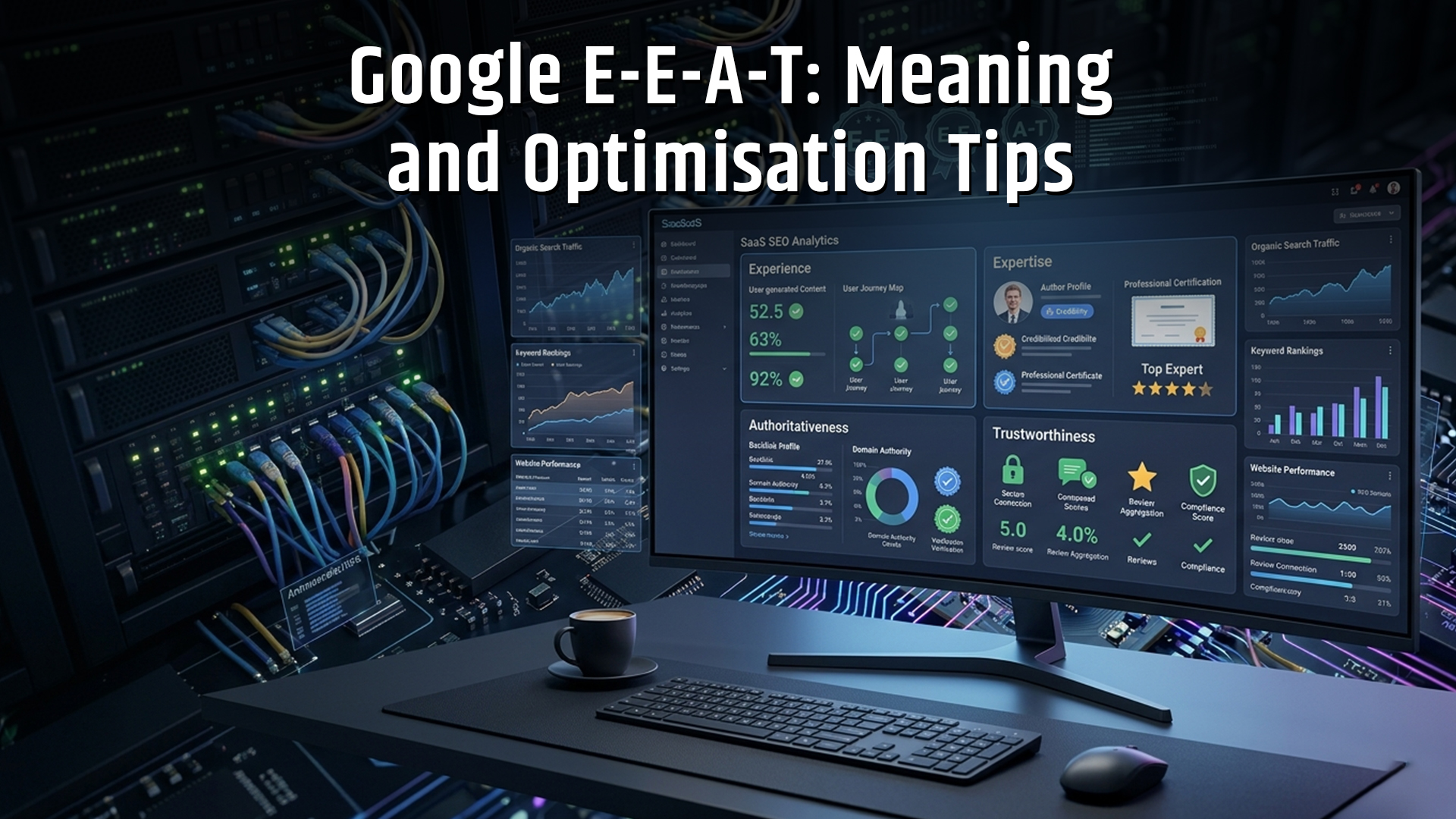
Google E-E-A-T (Experience, Expertise, Authoritativeness, Trustworthiness) is a content quality framework derived from the Search Quality Evaluator Guidelines. It helps Google assess whether your content is reliable, helpful, and credible especially for sensitive topics.
Optimising for E-E-A-T involves demonstrating real experience, building topical authority, showcasing expertise, and strengthening trust signals across your website. When combined with semantic SEO, it significantly improves long-term organic visibility.
What is Google E-E-A-T?
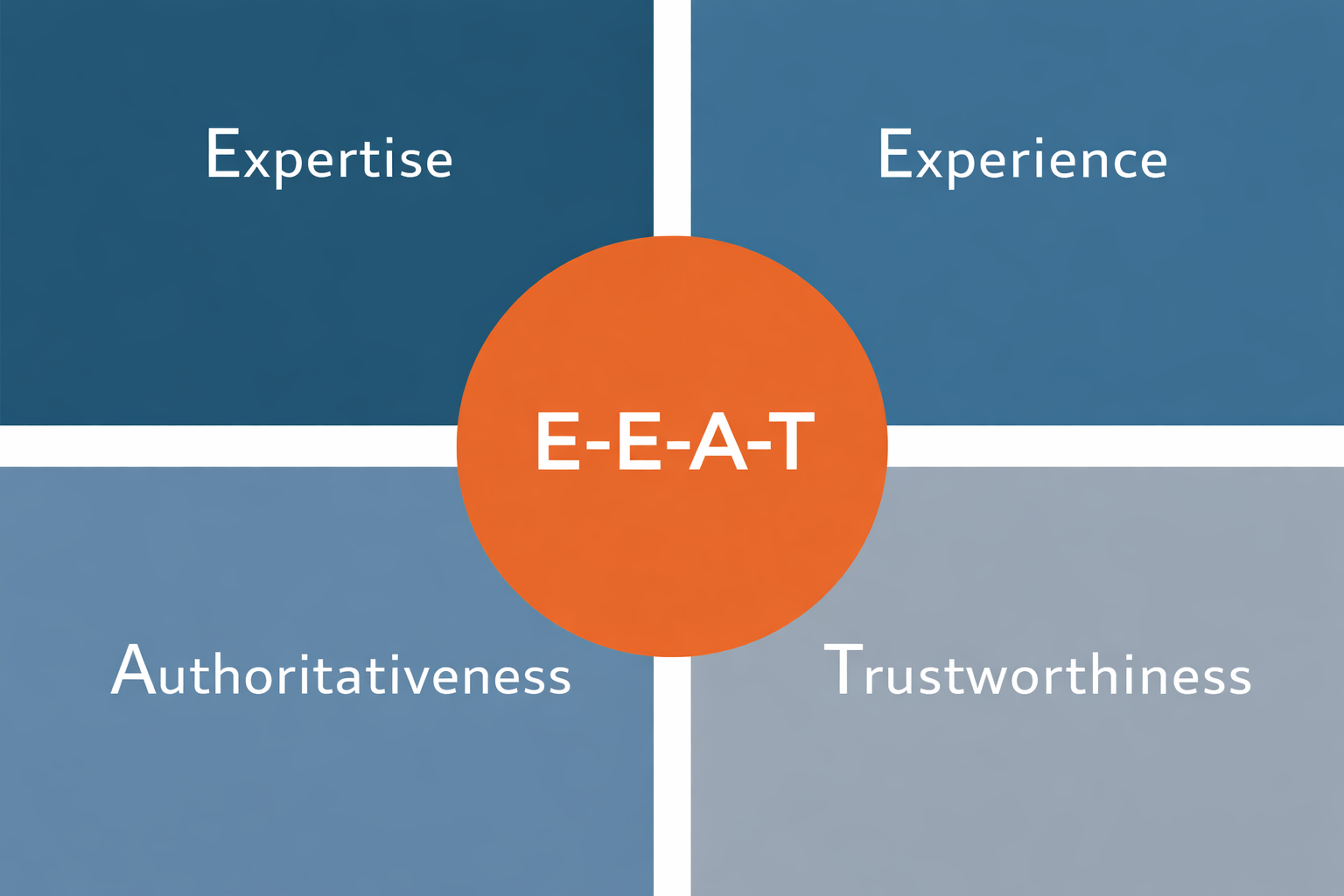
E-E-A-T stands for:
- Experience -Does the author have first-hand knowledge?
- Expertise -Does the author understand the topic deeply?
- Authoritativeness -Is the website or author recognised in the field?
- Trustworthiness -Can users rely on the content?
These principles come from Google’s Search Quality Evaluator Guidelines, used by human raters to evaluate search results and improve algorithms.
While E-E-A-T is not a direct ranking factor, it heavily influences how Google evaluates content quality.
Why E-E-A-T is Important for SEO
1. Aligns with Google’s Helpful Content System
Google prioritises content created for users, not search engines. E-E-A-T ensures your content meets this standard.
2. Critical for YMYL Topics
“Your Money or Your Life (YMYL)” topics such as health, finance, and legal advice require the highest levels of trust and accuracy.
3. Supports Semantic SEO
E-E-A-T strengthens:
- Topic depth
- Entity relevance
- Search intent satisfaction
4. Future-Proofs Your Content
Algorithm updates increasingly reward authentic authority rather than technical tricks.
4 Pillars of E-E-A-T
Breaking Down the Core Pillars of Google E-E-A-T. Understand how experience, expertise, authority, and trust impact your SEO success.
1. Experience
Experience refers to first-hand knowledge or direct interaction with the topic.
Examples:
- A product review written after actual use
- A travel blog based on personal visits
- A case study with real results
Google values content that demonstrates “I’ve done this” rather than “I’ve read about this.”
2. Expertise
Expertise measures how knowledgeable the author is about the subject.
Signals of Expertise:
- Professional qualifications
- Industry experience
- In-depth explanations
For example, medical content should ideally be written or reviewed by healthcare professionals.
3. Authoritativeness
Authoritativeness reflects your reputation within a niche.
Built Through:
- High-quality backlinks
- Brand mentions
- Thought leadership
The more your site is recognised as a trusted source, the stronger your authority.
4. Trustworthiness
Trust is the foundation of E-E-A-T.
Trust Signals:
- Secure website (HTTPS)
- Clear author identity
- Transparent policies
- Accurate and updated information
Without trust, experience and expertise lose their impact.
How E-E-A-T Enhances Semantic SEO
1. Entity-Based Optimisation
Search engines recognise entities like:
- Google Search
- Search Quality Evaluator Guidelines
- YMYL topics
Building content around these entities improves relevance.
2. Topic Clusters
Covering related subtopics strengthens your expertise and authority.
Example:
- E-E-A-T basics
- Trust signals
- Author credibility
- Content audits
3. Search Intent Alignment
E-E-A-T ensures your content:
- Answers real questions
- Solves user problems
- Provides actionable insights
Practical E-E-A-T Optimisation Tips
A practical guide to Google E-E-A-T optimisation tips.
1. Showcase Real Experience
- Add personal insights
- Include case studies
- Use original images or screenshots
2. Build Author Credibility
- Create detailed author bios
- Highlight qualifications
- Link to professional profiles
3. Strengthen Topical Authority
- Publish consistently
- Cover topics in depth
- Use internal linking
4. Earn High-Quality Backlinks
- Guest blogging
- Digital PR campaigns
- Industry collaborations
5. Improve Content Accuracy
- Fact-check all information
- Cite reliable sources
- Update outdated content regularly
6. Add Trust Signals to Your Website
- Contact page
- Privacy policy
- About page
- Customer testimonials
7. Use Structured Data (Schema)
Schema helps search engines understand:
- Authors
- Reviews
- FAQs
8. Regular Content Audits
- Remove low-quality pages
- Refresh outdated posts
- Improve readability and UX
Advanced E-E-A-T Strategies
To stand out in competitive niches:
- Publish original research and data
- Build a personal or brand authority
- Collaborate with industry experts
- Gain mentions in reputable publications
- Encourage user-generated content (reviews, comments)
Conclusion
Google E-E-A-T is all about creating content that people can trust and learn from. Instead of focusing only on keywords, you should focus on sharing real experience, showing your knowledge, and building a strong and honest online presence.
When your content is helpful, accurate, and transparent, both users and Google will trust it more. Over time, this trust helps improve your rankings and brings steady growth. The key is simple create content for people first, stay consistent, and always aim to provide real value.
Frequently Asked Questions (FAQs)
- Niche expertise
- Unique experience
- High-quality content
Contact us to get a digital strategy
Contact us for digital strategy guidance.