
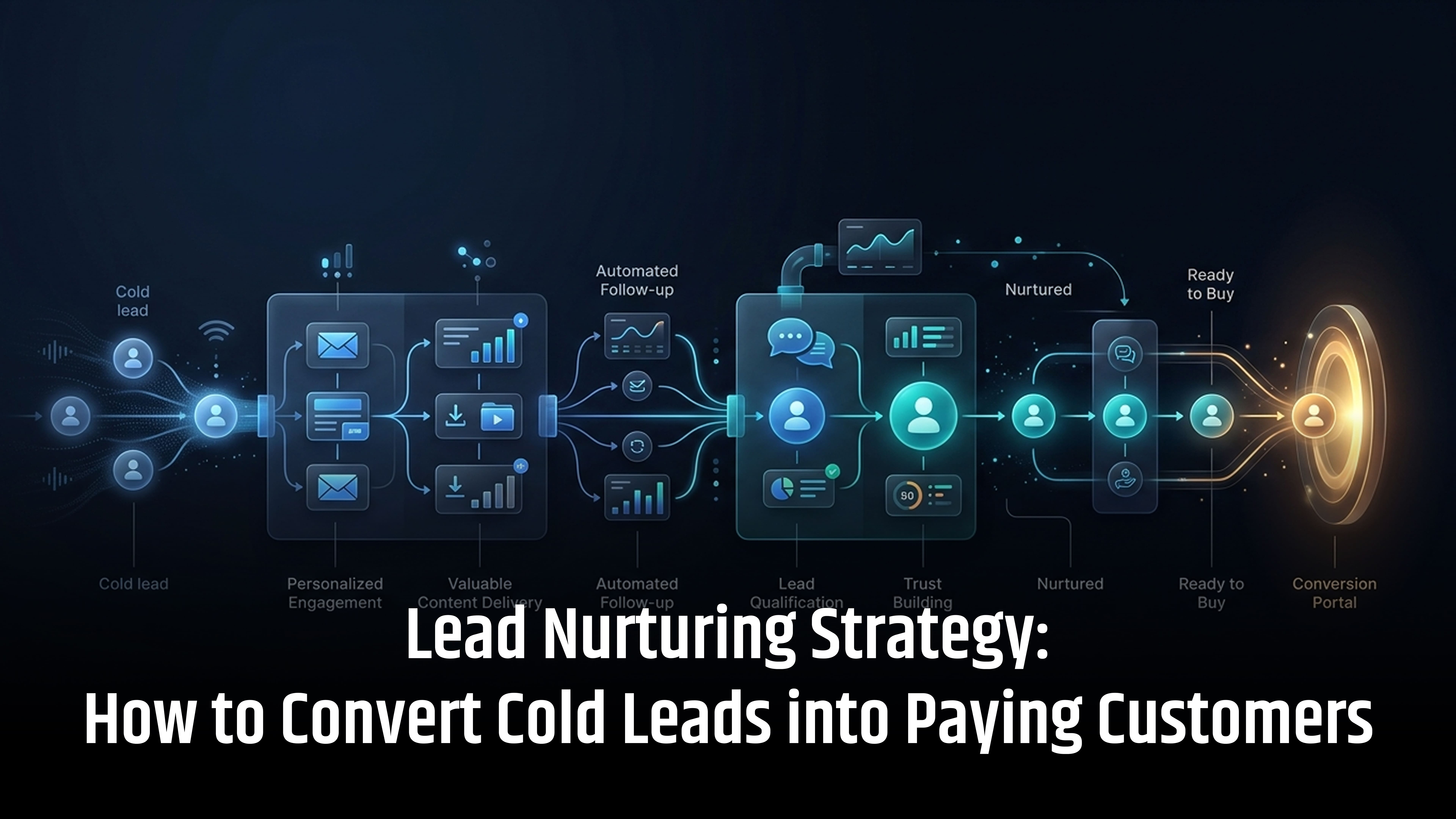
Getting leads is only half the job. The real challenge is turning those interested prospects into paying customers. Many leads do not buy after the first enquiry because they need more information, time, trust and the right reason to take action.
That is where lead nurturing strategies to convert customers make a difference. Lead nurturing helps you stay relevant to potential customers by delivering useful information, timely follow-ups and personalised communication throughout the buying journey.
In this guide, you will learn practical lead nurturing strategies, including email campaigns, lead scoring, customer segmentation, CRM automation, behavioural triggers and sales follow-ups, so you can move more leads from initial interest to purchase.
Lead Nurturing Strategies to Convert Customers
Not every lead is ready to buy after the first interaction. Some need more information. Others need time to compare options or get approval.
A strong lead nurturing strategy helps you stay connected with these prospects. It gives them useful information at each stage of the customer journey.
Here are 12 practical lead nurturing strategies that can help turn more prospects into customers.
1. Segment Your Leads
Do not send the same message to every lead. A new website visitor has different needs from someone who has requested a quote.
Start by grouping leads based on:
- Industry and business size
- Job role and location
- Lead source
- Website activity
- Content downloads
- Product interest
- Buying stage
- Previous conversations
For example, a lead who downloads an introductory guide may need educational content. A lead who visits your pricing page may be closer to making a decision.
Better segmentation leads to more relevant communication.
2. Match Content to the Buyer's Journey
Your content should answer the question a prospect has at that moment.
| Buyer Stage | What the Lead Wants to Know | Useful Content |
|---|---|---|
| Awareness | What is the problem? | Blogs, guides, research |
| Consideration | What are the solutions? | Comparisons, webinars |
| Evaluation | Which option is right? | Case studies, demos |
| Decision | Is it worth the investment? | Pricing, ROI, testimonials |
| Implementation | How does it work? | Guides, training, FAQs |
| Retention | How can I get more value? | Support and useful resources |
This approach keeps your content relevant. It also avoids pushing a sales call before the prospect is ready.
3. Create an Email Nurturing Sequence
Email is still a useful channel for lead nurturing. But every email should have a clear purpose.
A simple nurture sequence could include:
Email 1: Welcome
Deliver the resource the lead requested.
Email 2: Education
Answer a common problem they may have.
Email 3: Practical advice
Share a checklist, guide or useful tip.
Email 4: Proof
Show a relevant case study or customer example.
Email 5: Evaluation
Help the lead compare possible solutions.
Email 6: Next step
Offer a suitable action, such as a consultation or demo.
The right number of emails depends on your sales cycle, audience, product and lead behaviour. Do not send messages simply to fill a sequence.
4. Use Behavioural Triggers
Lead nurturing works better when it responds to what people actually do.
For example:
- Downloads a guide: Send related content.
- Attends a webinar: Follow up with useful resources.
- Visits a pricing page: Consider a sales follow-up.
- Requests a demo: Move them out of general nurturing.
- Stops engaging: Start a re-engagement campaign.
These actions are known as behavioural triggers. They help you send the right message based on customer activity.
5. Personalise Your Communication
Personalisation should be based on relevance, not just a person's first name.
You can personalise content based on:
- Industry
- Job role
- Business needs
- Previous interactions
- Product interest
- Content viewed
- Buying stage
For example, a property business may receive content about managing property leads. A software company may receive content about improving its sales pipeline.
The aim is simple: make the message useful to the person receiving it.
Avoid using personal data simply because it is available. Too much personalisation can feel intrusive.
6. Use a CRM to Manage Lead Information
A CRM (Customer Relationship Management) system gives your team one place to manage lead information.
A useful CRM record can include:
- Contact details
- Company information
- Lead source
- Previous conversations
- Website activity
- Email interactions
- Lead score
- Buying stage
- Sales notes
- Next follow-up
This gives sales and marketing teams better context.
It also reduces missed follow-ups and helps prevent different team members from sending conflicting messages.
7. Use Lead Scoring to Identify Buying Intent
Lead scoring helps businesses identify which prospects are more likely to become customers.
You can assign points to actions such as:
| Lead Activity | Example Score |
|---|---|
| Downloads a guide | 5 |
| Attends a webinar | 10 |
| Visits a product page | 5 |
| Views pricing | 10 |
| Requests a demo | 25 |
| Replies to sales | 20 |
These numbers are examples only. Your scoring model should match your own customer journey and sales process.
Do not treat an email open as proof that someone is ready to buy.
A better approach looks at several signals: Lead fit + behaviour + buying intent
When these signals come together, the lead may be ready for a sales conversation.
8. Combine Automation With Human Follow-Up
Marketing automation can save time and keep lead nurturing consistent.
It can help you:
- Send emails
- Update CRM records
- Create follow-up reminders
- Assign leads
- Track customer activity
- Change lead stages
- Trigger re-engagement campaigns
But automation should not replace human conversations.
If a prospect asks a detailed question, they may need to speak with a real person. A useful rule is: Automate the process, not the relationship.
Your nurture workflow should also change when a sales conversation begins.
9. Use Multiple Channels Carefully
Email is not the only way to nurture leads. Depending on your audience, you may use:
- Website content
- Webinars
- Sales calls
- Events
- SMS
- Retargeting
Each channel should have a clear purpose.
For example, email can provide useful information. A webinar can explain a complex topic. A sales call can answer specific questions.
Do not use every channel simply because you can. Keep the customer experience consistent.
10. Re-Engage Inactive Leads
Some leads stop responding because they are no longer interested. Others simply need more time. A lead re-engagement campaign gives inactive prospects another chance to respond.
You could ask:
- Is this still relevant to you?
- Are you still looking for a solution?
- Would you prefer fewer emails?
- Would another resource help?
- Has your priority changed?
Keep the message short and useful.
If a lead remains inactive, reduce communication or remove them from marketing campaigns where appropriate. This can also help protect email deliverability.
11. Align Sales and Marketing
Lead nurturing works better when sales and marketing agree on what makes a qualified lead.
Both teams should define:
- What is an MQL?
- What is an SQL?
- Which actions show buying intent?
- When should sales receive a lead?
- How quickly should sales follow up?
- When should a lead return to nurturing?
A simple process is:
Lead generation → Lead nurturing → Qualification → Sales follow-up → Opportunity → Customer
This creates a clear handover between marketing and sales. It also helps sales teams spend more time on leads with genuine potential.
12. Track What Leads to Customers
Do not measure lead nurturing by email opens and clicks alone. Focus on metrics that show sales and customer growth.
Track:
- Lead-to-customer conversion rate: How many nurtured leads become customers.
- MQL-to-SQL conversion rate: How many marketing-qualified leads become sales-qualified leads.
- Sales acceptance rate: How many leads are accepted by sales.
- Time to conversion: How long leads take to become customers.
- Pipeline generated: The potential sales value created.
- Revenue from nurtured leads: The revenue generated from nurtured leads.
- Conversion by segment: Which audiences and lead sources convert best.
Use these insights to improve your lead nurturing campaigns and increase conversions.
Common Lead Nurturing Mistakes to Avoid
- Starting with a sales pitch. Do not push a service or meeting in the first message. Start with something useful. Share an insight, guide or solution that matches the lead’s needs.
- Treating every lead the same. A new website visitor has different needs from someone who has already requested a quote. Segment leads based on their interests, behaviour and buying stage.
- Following up too often. Too many messages can make leads lose interest. Set a clear follow-up schedule. Give prospects enough time to respond.
- Giving up too soon. Not every lead is ready to buy straight away. Some need more information or time. Use relevant content to stay connected without becoming intrusive.
- No clear sales handoff. Define when a nurtured lead should move to the sales team. Use clear signals such as a quote request, consultation enquiry or strong engagement.
- Not tracking results. Monitor replies, clicks, enquiries and conversions. This shows which content works and where leads lose interest. Use these insights to improve your lead nurturing strategy.
Ready to Turn More Leads Into Customers?
Your next customer could already be in your pipeline. The question is whether you are following up in the right way.
WOWinfotech can help you build smarter digital solutions that keep leads engaged and support better customer conversion. From strategy to technology, we help you create a smoother journey from first enquiry to final sale.
Stop letting good leads go cold. Let’s turn more opportunities into real customers. Get in touch with WOWinfotech today.
Conclusion
Effective lead nurturing strategies to convert customers do more than send emails. They build trust. They understand customer needs. They also guide prospects through the buyer journey.
Use customer segmentation to group similar leads. Share useful and relevant content. Use email nurturing to stay connected. Apply lead scoring to spot buying intent. Use CRM automation to manage follow-ups. Involve your sales team at the right time.
Focus on relevance, not volume. Track lead engagement, conversion rates, sales pipeline and customer acquisition. Use these insights to improve your campaigns.
Whether you run a B2B or B2C business, a clear lead nurturing strategy can improve lead conversion. It can also support a shorter sales cycle and stronger customer relationships.
Frequently Asked Questions
Contact us to get a digital strategy
Contact us for digital strategy guidance.