

To choose the right keywords for SEO, identify search terms that match user intent, have realistic competition, and align with your content goal. Focus on long-tail, intent-driven keywords, group them into semantic topic clusters, analyze SERPs, and optimize content using natural language so search engines understand context, not just exact words.
What are SEO Keywords?
SEO keywords are the words and phrases users type into search engines to find information, products, or services. Search engines use these queries to understand search intent and match them with the most relevant content.
In SEO, keywords are no longer treated as isolated terms. Google processes them as entities, concepts, and relationships using natural language processing (NLP).
Entities involved:
- Search intent
- SERPs (Search Engine Results Pages)
- Semantic relevance
- Topic authority
- NLP (Natural Language Processing)
- Google algorithms
Why is choosing the Right Keywords Important
Choosing the wrong keywords leads to:
- Low-quality traffic
- High bounce rates
- Poor conversions
- Missed ranking opportunities
Choosing the right keywords helps you:
- Rank faster with less effort
- Attract users ready to take action
- Build topical authority
- Win featured snippets and AI-generated answers
Types of Keywords You Must Understand
1. Informational Keywords
Used when users want to learn.
Examples:
- How to choose keywords for seo
- What is keyword research
- Seo keyword strategy
2. Commercial Investigation Keywords
Used when users compare options.
Examples:
- best keyword research tools
- ahrefs vs semrush
- keyword research software
3. Transactional Keywords
Used when users want to buy.
Examples:
- buy seo tools
- hire seo expert
- seo services pricing
4. Navigational Keywords
Used to find a specific brand or site.
Examples:
- Google Keyword Planner
- ahrefs login
Google prefers clear intent separation. Don’t mix transactional intent into informational content.
keyword research process
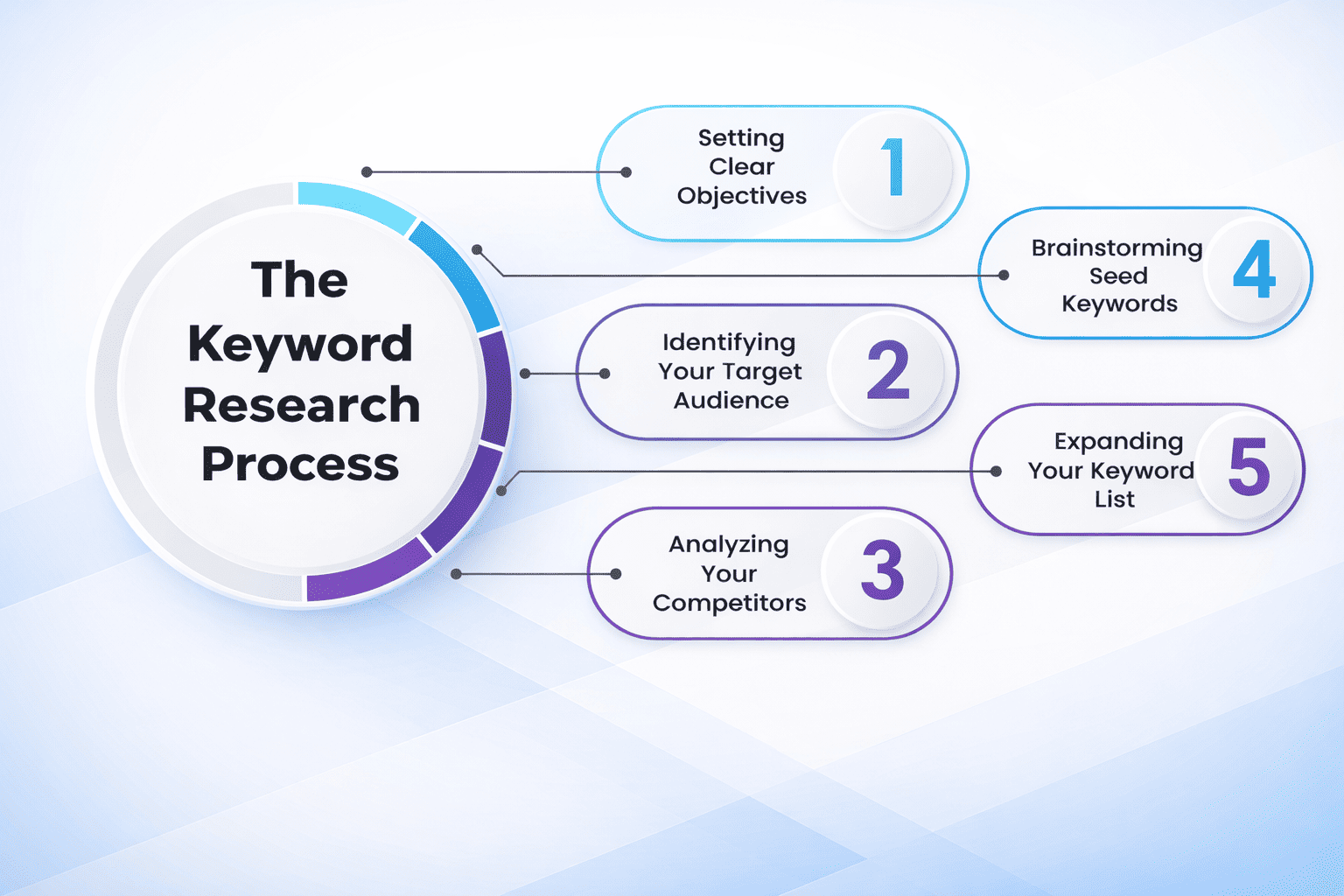
How to Choose the Right Keywords for SEO
Here is a step-by-step guide on how to choose the right keywords for SEO
Step 1: Define Your Search Intent
The user wants to clarify the intent behind a request before jumping into tools or data.
They’re asking for a concise problem-framing statement that captures what the user is really trying to solve.
Search intent falls into four buckets:
- Learn
- Compare
- Buy
- Find
Your content must serve a single primary intent.
Step 2: Start With Seed Keywords
Seed keywords are the main terms that define your core topic or niche. They act as the starting point for keyword research and content strategy.
SEO examples:
- keyword research
- seo keywords
- keyword strategy
Use:
- Google Autocomplete
- “People Also Ask”
- Related Searches
- Google Search Console
Step 3: Expand Into Long-Tail Keywords
Long-tail keywords are detailed, multi-word phrases that reflect specific user intent. They usually have lower search volume but higher relevance and less competition.
Examples:
- How to choose the right keywords for seo
- keyword research for beginners
- seo keyword strategy for blogs
Long-tail keywords trigger more featured snippets.
Step 4: Analyze Keyword Metrics
Don’t chase volume blindly. Use this priority order:
|
Metric |
Why It Matters |
|
Search Intent |
Determines ranking relevance |
|
SERP Competition |
Shows realistic difficulty |
|
Content Quality |
Beatable or not |
|
Search Volume |
Bonus, not primary |
Low-volume keywords with strong intent often outperform high-volume ones.
Step 5: Analyze the SERP Before Finalizing Keywords
Analyzing the SERP before finalizing keywords helps you understand search intent, competition, and content gaps.
Search your keyword and check:
- Are results guides, blogs, or tools?
- Are featured snippets present?
- Is Google rewarding depth or simplicity?
If the SERP doesn’t match your content type, don’t target it.
Step 6: Group Keywords Into Semantic Clusters
Grouping keywords into semantic clusters helps organize related terms by intent and topic. Google ranks topics, not pages.
Create clusters like:
Primary Topic: How to choose the right keywords for SEO
Supporting Keywords:
- keyword research process
- search intent seo
- long-tail keywords
- keyword difficulty
- seo keyword tools
This increases topical authority and snippet eligibility.
Best Keyword Research Tools (2026)
Here is a list of keyword research tools commonly used for SEO and content planning.
|
Tool |
Best For |
|
Google Keyword Planner |
Baseline data |
|
Ahrefs |
SERP analysis & gaps |
|
SEMrush |
Keyword intent mapping |
|
Moz |
Beginner-friendly research |
|
Google Search Console |
Real keyword performance |
Featured snippets often come from pages already ranking in positions 1–5.
On-Page SEO Practices for Keywords
- Primary keyword in title and URL
- Related keywords in H2/H3 headings
- Internal links with descriptive anchors
- Image alt text describing context
- FAQ schema (recommended)
Common Keyword Research Mistakes
- Targeting keywords without intent
- Ignoring SERP analysis
- Using one keyword per page
- Over-optimizing exact-match phrases
- Skipping long-tail keywords
Conclusion
Choosing the right keywords for SEO is about matching search intent, leveraging long-tail queries, and building semantic relevance. Focus on what users are searching for, organize keywords into topic clusters, and provide clear, concise answers. This approach not only improves rankings but also increases your chances of earning featured snippets and driving qualified traffic.
Frequently Asked Questions
- Long-tail keywords for higher conversion and easier ranking
- Semantic keywords to cover related topics and entities
- Keywords aligned with search intent: informational, commercial, transactional, or navigational
- Understanding search intent and providing relevant answers
- Optimizing on-page elements like titles, headings, and content
- Building authority through backlinks and topical expertise
- Leveraging semantic SEO so search engines understand context, not just keywords
Identify your audience’s search intent (informational, commercial, transactional)
- Start with seed keywords and expand to long-tail variations
- Analyze competition and SERPs to find realistic opportunities
- Group keywords into semantic clusters to build topic authority
- Optimize content naturally with primary and related keywords
Contact us to get a digital strategy
Contact us for digital strategy guidance.