
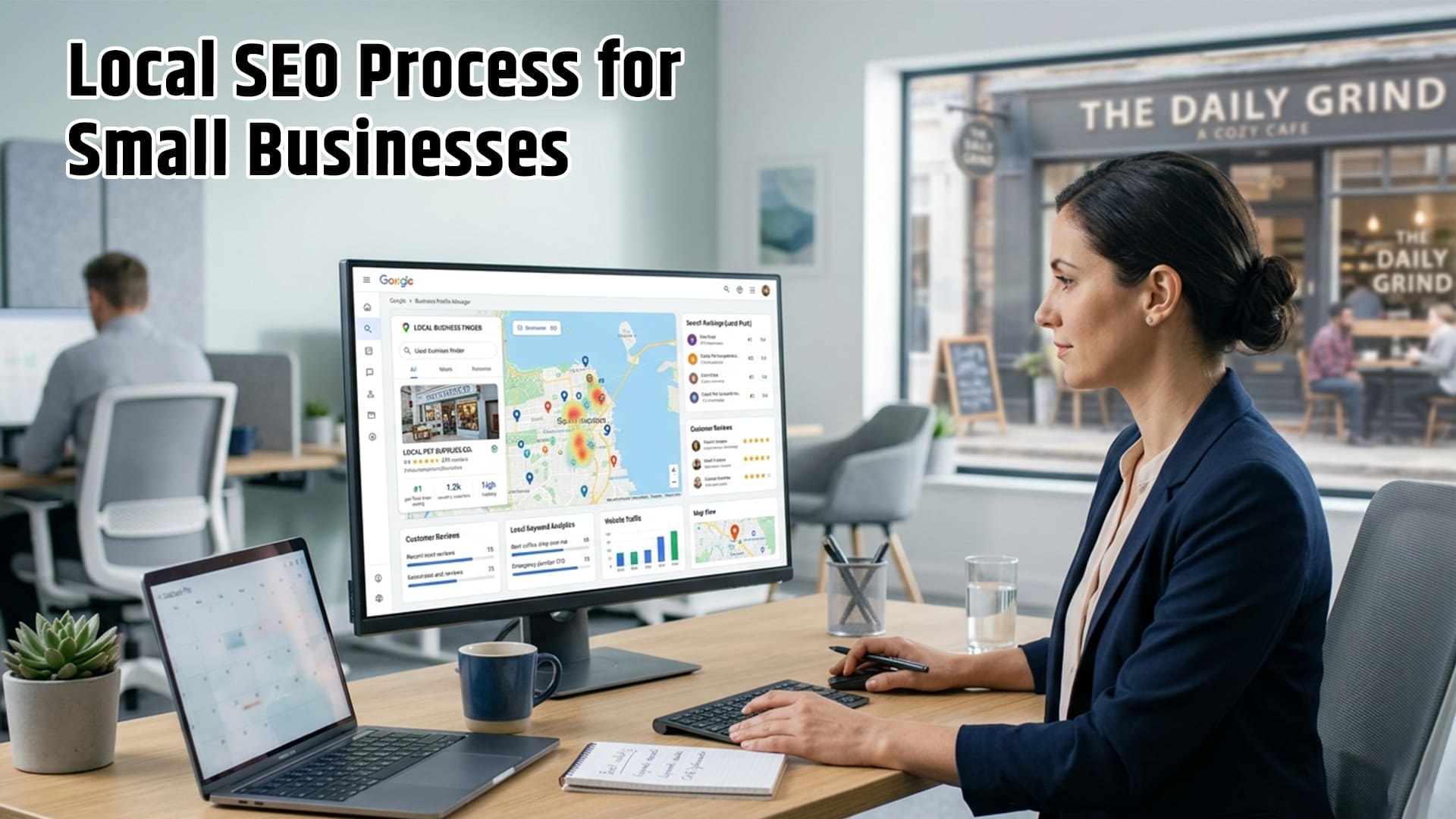
Local SEO process for small businesses is the method of optimizing your business so it appears in local search results like Google Maps, the Local Pack, and “near me” searches.
This includes optimizing your Google Business Profile, keeping your business information consistent across platforms, targeting location-based keywords, building reviews, and creating local content. For SEO, this means that instead of only focusing on website traffic, you need to focus on visibility, trust, and local relevance, because appearing in front of nearby customers at the right moment is more valuable than just getting clicks.
What is Local SEO?
Local SEO (Local Search Engine Optimization) is the process of optimizing a business to rank in location-based search queries such as:
- “best restaurant near me”
- “digital marketing agency in UK”
Core Entities in Local SEO:
- Google Business Profile (GBP)
- Google Maps
- Local Pack (Top 3 results)
- NAP (Name, Address, Phone Number)
- Online Reviews
- Local Citations
Why Local SEO is Important for Small Businesses
Here is a clear explanation of why local SEO is important and the benefits it provides for small businesses.
|
Aspect |
Details |
|
Main Benefit |
Helps small businesses appear in local search results and attract nearby customers |
|
High Conversion |
Drives high-conversion local traffic with strong purchase intent |
|
Visibility Boost |
Improves visibility on Google Maps and Local Pack |
|
Trust Building |
Builds credibility through customer reviews and ratings |
|
Customer Actions |
Increases foot traffic, phone calls, and inquiries |
|
Key Insight |
Nearly 50% of all searches have local intent, making it essential for growth |
Local SEO Process for Small Businesses
Here is a step-by-step guide to the local SEO process for small businesses, covering everything from optimizing your Google Business Profile to building local authority, improving search visibility, and attracting more nearby customers.
1. Optimize Your Google Business Profile
Google Business Profile optimization is the most important step in local SEO.
Checklist:
- Add accurate business name & category
- Update address, phone, hours
- Upload real photos
- Post updates regularly
- Respond to reviews
A complete profile increases chances of ranking in the Local Pack.
2. Ensure NAP Consistency
NAP consistency means your business Name, Address, and Phone Number are identical across all platforms.
Where to maintain consistency:
- Website
- Directories (Yelp, Justdial)
- Social media
Inconsistent NAP reduces trust signals and rankings.
3. Perform Local Keyword Research
Local keyword research identifies search terms customers use in your area.
Examples:
- “SEO agency in Pune”
- “best dentist near me”
Optimization Tips:
- Use city + service keywords
- Include conversational queries (voice search)
- Add location modifiers
4. Optimize Your Website for Local SEO
On-page SEO helps search engines understand your location relevance.
Elements:
- Title tags: Service + Location
- Meta descriptions with local keywords
- H1, H2 headings structured properly
- Internal linking
- Schema markup (LocalBusiness)
5. Build Local Citations
Local citations are mentions of your business on directories and websites.
Examples:
- Google Business Profile
- Bing Places
- Apple Maps
- Yellow Pages
Citations improve local authority and trust.
6. Generate Customer Reviews
Customer reviews are a major local ranking factor.
Best Practices:
- Ask happy customers for reviews
- Respond to all reviews
- Use keywords naturally in replies
More positive reviews = higher visibility and conversions.
7. Create Localized Content
Localized content helps you rank for geo-specific searches.
Content Ideas:
- “Top cafes in Pune”
- Area-specific service pages
- Local event blogs
This builds topical authority and relevance.
8. Build Local Backlinks
Local backlinks are links from websites in your region.
Sources:
- Local blogs
- News websites
- Business directories
- Sponsorships
Backlinks increase domain authority and rankings.
9. Optimize for Mobile & Technical SEO
Most local searches happen on mobile devices.
Ensure:
- Fast loading speed
- Mobile-friendly design
- HTTPS security
- Clean URL structure
Local SEO Ranking Factors (2026)
|
Category |
Ranking Factors |
|
Primary Factors |
Relevance |
|
Distance |
|
|
Prominence |
|
|
Secondary Factors |
Reviews & Ratings |
|
Backlinks |
|
|
User Engagement |
Common Local SEO Mistakes
- Keyword stuffing business name
- Ignoring reviews
- Inconsistent NAP
- No local content
- Poor mobile experience
What are the steps in local SEO?
- Optimize Google Business Profile
- Maintain NAP consistency
- Do local keyword research
- Optimize website
- Build citations
- Get reviews
- Create local content
- Build backlinks
- Improve technical SEO
Conlusion
The local SEO process for small businesses in 2026 is driven by:
- Trust (reviews & reputation)
- Relevance (content & keywords)
- Authority (backlinks & citations)
Businesses that consistently optimize their Google Business Profile, website, and local signals will dominate local search results and attract high-intent customers.
Local SEO is not a one-time setup it’s a continuous growth strategy.
FAQs
Contact us to get a digital strategy
Contact us for digital strategy guidance.