
Getting your website noticed online is more important than ever. Every day, millions of people search for information, products, and services on platforms like Google Search. To appear in front of the right audience, businesses need effective SEO strategies.
Recently, a new question has come up: Should I focus on Traditional SEO or AI SEO?
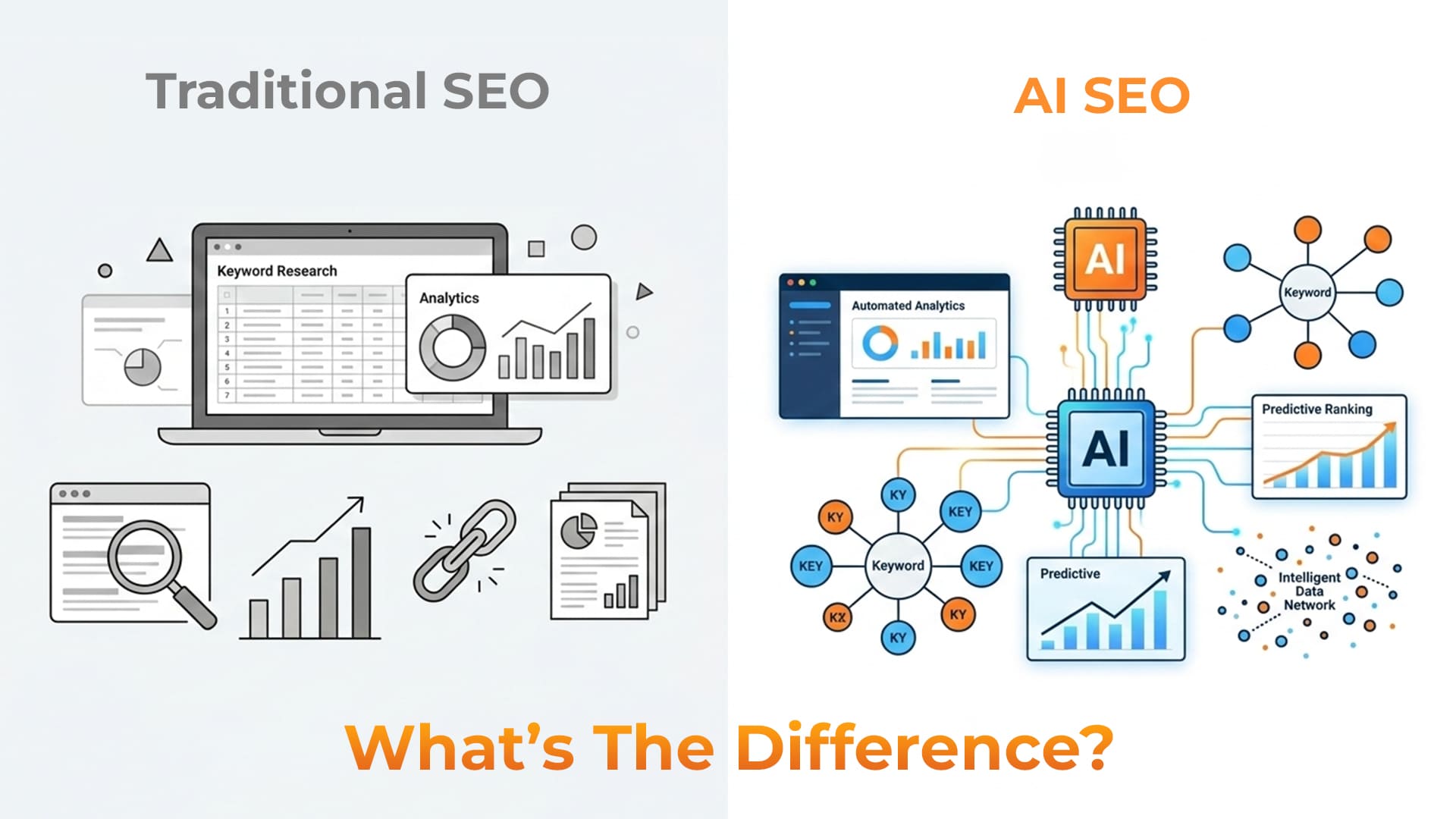
Both strategies are important, but they work in very different ways. Traditional SEO helps your website rank higher in search results, while AI SEO ensures your content is understood, trusted, and recommended by AI-powered search tools.
In this blog, we will explain Traditional SEO vs AI SEO in simple terms, compare their differences, explore their benefits, and show how you can use both strategies to grow your online presence.
Traditional SEO vs AI SEO
- Traditional SEO: Focuses on keywords, backlinks, and technical website optimization to rank on search engines.
- AI SEO: Focuses on understanding user intent, context, and helping AI systems (like chatbots or AI summaries) recommend your content.
Traditional SEO helps people find your website. AI SEO helps AI systems trust and show your content.
What is Traditional SEO?
Traditional SEO is the process of improving a website to rank higher on search engines. For years, this has been the main way to attract organic traffic.
Main Elements of Traditional SEO
- Keyword Research: Finding the right search terms your audience uses.
- On-Page Optimization: Optimizing headings, meta tags, and content.
- Backlink Building: Earning links from other trusted websites.
- Technical SEO: Site speed, mobile optimization, and indexing.
- Content Optimization: Ensuring content is relevant, readable, and informative.
Example: If someone searches “best SEO tools”, traditional SEO helps your website appear in Google’s search results.
Goal: Rank higher in search results, increase traffic, and attract clicks.
What is AI SEO?
AI SEO focuses on making your content understandable and trustworthy for AI-powered search engines and chat systems.
Modern search engines and AI assistants use:
- Artificial Intelligence
- Machine Learning
- Natural Language Processing
AI SEO focuses on:
- Understanding user intent rather than just keywords
- Answering questions clearly
- Being trusted and cited by AI systems
Example: A user asks, “Which SEO strategy is best for 2026?” AI SEO helps your content appear directly in AI-generated answers or voice search results.
Traditional SEO vs AI SEO: Differences
|
Feature |
Traditional SEO |
AI SEO |
|
Main Focus |
Keywords |
User intent & context |
|
Optimization Target |
Search engines |
AI systems + search engines |
|
Content Style |
Keyword-focused |
Natural language, conversational |
|
Analysis |
Manual |
AI-powered & automated |
|
Updates |
Periodic |
Continuous, real-time |
|
Success Metric |
Rankings & traffic |
Visibility & citations |
|
User Experience |
Search results page |
Direct answers, AI summaries |
How Search Has Evolved
- Keyword-Based SEO: Optimized content for exact keywords and backlinks.
- Semantic SEO: Focused on topics, context, and user intent.
- AI SEO (Today): Focuses on understanding the question fully and providing trusted answers.
Modern search is moving from “ranking pages” to “understanding knowledge.”
Why AI SEO Important
AI SEO is crucial because:
- Many users now receive zero-click answers from AI systems.
- AI can analyze content meaning, context, and entities.
- Optimized content gets cited directly in AI answers or voice searches.
In short: AI SEO ensures your content is visible to AI, not just humans.
E-E-A-T in Traditional vs AI SEO
E-E-A-T (Experience, Expertise, Authoritativeness, Trustworthiness) is important for both:
|
Element |
Traditional SEO |
AI SEO |
|
Experience |
Content based on knowledge |
Practical, real-world examples |
|
Expertise |
Written by experts |
Verified, trusted sources |
|
Authority |
Backlinks, domain authority |
Citations across AI sources |
|
Trust |
Secure and accurate |
Factually correct, transparent |
AI systems prioritize trusted sources they can reference.
Content Creation: Traditional vs AI SEO
Traditional SEO content:
- Focused on keywords
- Fixed word count
- Written mainly for rankings
AI SEO content:
- Written naturally
- Answers real user questions
- Covers topics deeply
- Easy for humans and AI to understand
Best practice: Combine human strategy with AI tools for speed and scale.
Benefits of Traditional SEO
- Builds long-term website authority
- Improves organic rankings
- Increases traffic over time
- Essential for local SEO and e-commerce
Benefits of AI SEO
- Helps content appear in AI summaries
- Improves voice search visibility
- Captures user intent more accurately
- Scales content creation and updates
- Prepares your website for future AI-driven search
The Best Strategy: Hybrid SEO
Traditional SEO builds:
- Rankings
- Organic traffic
- Website foundation
AI SEO adds:
- Content visibility in AI systems
- Answer recommendations
- Semantic relevance
Hybrid approach = maximum reach + future-proof SEO
Simple AI SEO Optimization Tips
- Write clear, simple content
- Answer questions your audience asks
- Use headings and bullet points
- Include FAQs
- Use structured data/schema markup
- Focus on factual accuracy
- Update content regularly
Concluion
Traditional SEO and AI SEO work best together. Traditional SEO helps your website rank and attract traffic, while AI SEO ensures your content is understood and recommended by AI systems. Combining both strategies maximizes visibility, builds trust, and future-proofs your online presence.
Contact us to get a digital strategy
Contact us for digital strategy guidance.