
Off-page SEO is the process of improving a website’s authority, trust, relevance, and visibility through activities that happen outside your website. These activities include earning backlinks, digital PR, brand mentions, reviews, local citations, social engagement, and expert contributions.
Off-page SEO is no longer only about link building. Search engines such as Google evaluate how people, websites, brands, and communities talk about your business across the web. Strong off-page signals help search engines understand whether your content is trustworthy and useful.
What is Off-Page SEO?
Off-page SEO refers to all optimisation activities performed outside your own website to improve search engine rankings.
Unlike on-page SEO, which focuses on content, keywords, metadata, and technical improvements, off-page SEO focuses on external validation signals.
Search engines use off-page signals to answer questions such as:
- Is this website trusted?
- Do other authoritative websites reference it?
- Is the brand recognised in its industry?
- Do users engage with the business online?
- Does the website demonstrate expertise and credibility?
These signals help search engines measure authority and trustworthiness.
Why Off-Page SEO Important
Even if your website has excellent content, it may struggle to rank without authority signals from other websites and platforms.
Off-page SEO helps with:
- Higher search rankings
- Better domain authority
- Increased organic traffic
- Improved trust and credibility
- Stronger brand awareness
- More referral traffic
- Better visibility in AI-driven search experiences
Recent SEO studies show that search engines increasingly evaluate contextual trust, brand relevance, and entity relationships rather than simply counting backlinks.
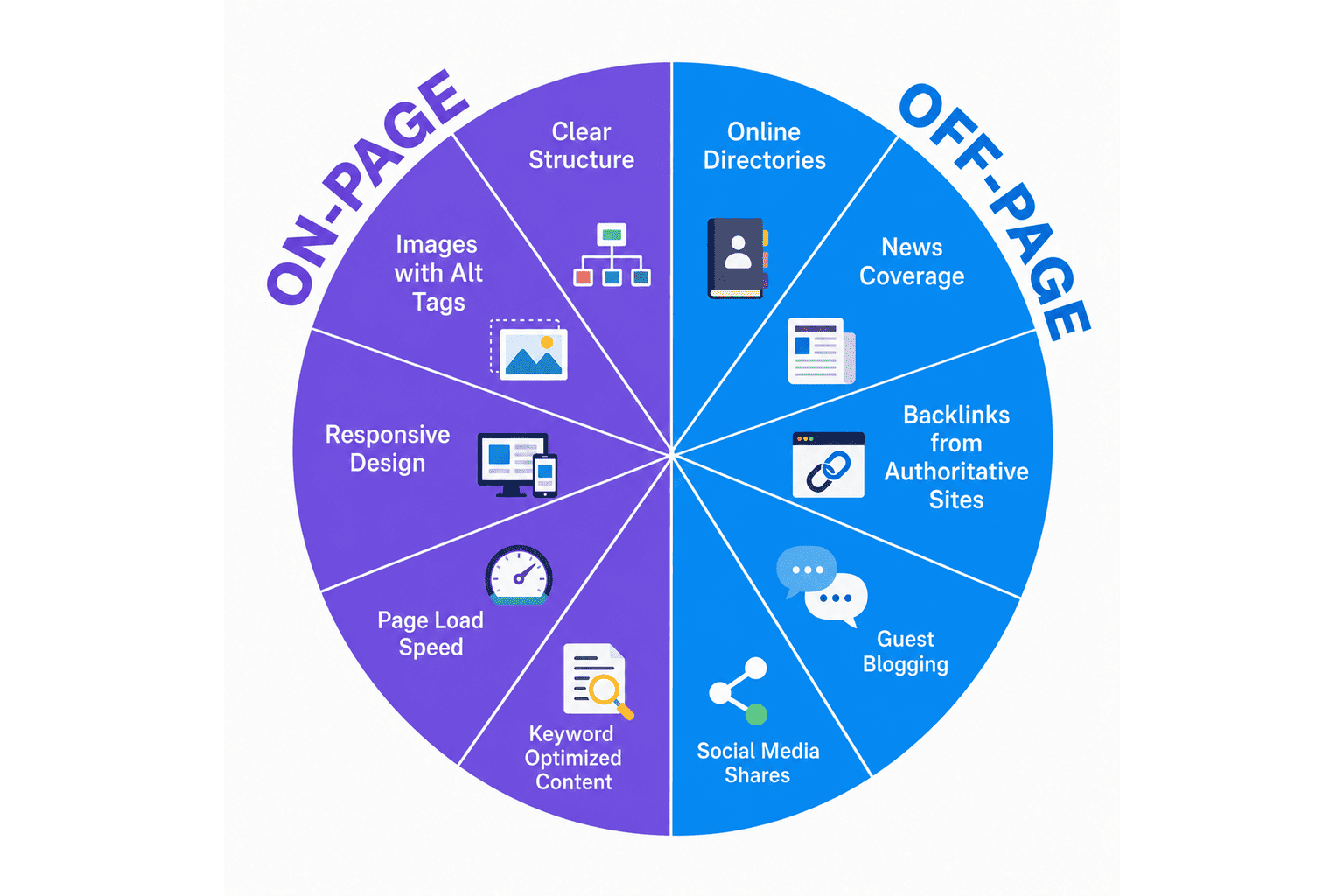
Off-Page SEO vs On-Page SEO
Here are the differences between off-page SEO and on-page SEO explained
|
Feature |
On-Page SEO |
Off-Page SEO |
|
Focus |
Website optimisation |
External authority |
|
Main Goal |
Improve relevance |
Build trust |
|
Activities |
Content, headings, internal links |
Backlinks, PR, reviews |
|
Control |
Fully controlled by website owner |
Partially controlled |
|
Ranking Impact |
Relevance and user experience |
Authority and trust |
Both are essential for sustainable SEO success.
How Search Engines Evaluate Off-Page SEO
Search engines analyse multiple off-site signals, including:
- Backlink quality
- Topical relevance
- Editorial mentions
- Brand searches
- Online reviews
- Social discussions
- Expert citations
- User trust signals
- Local business citations
- Digital PR coverage
Search algorithms now use entity understanding and semantic relationships to connect brands, topics, industries, and expertise.
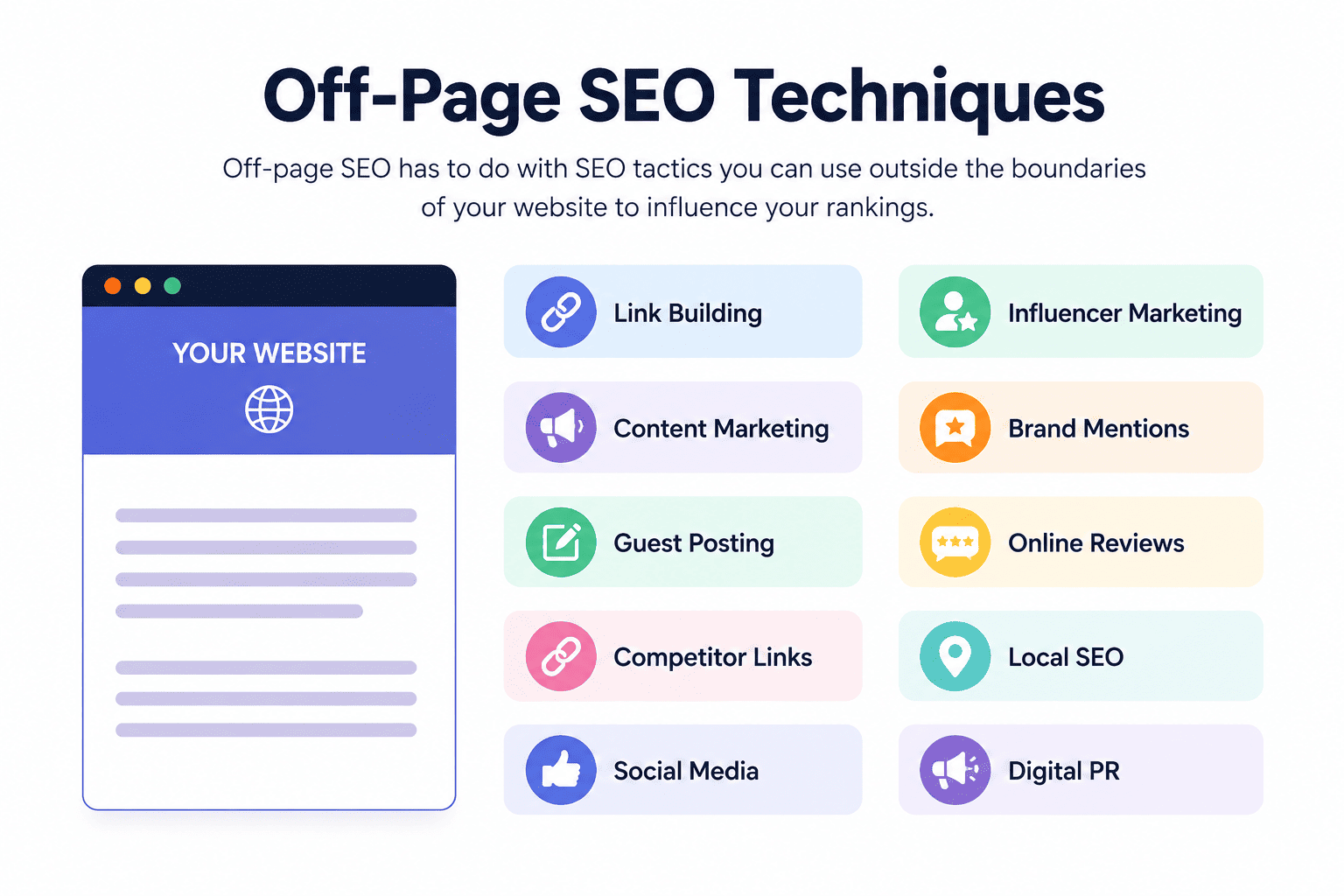
Top Off-Page SEO Techniques and Activities
Here are the top off-page SEO techniques and activities that help improve website authority, trust, and search engine rankings:
1. High-Quality Backlink Building
Backlinks remain one of the strongest ranking factors in SEO.
A backlink is a link from another website to your website. Search engines treat these links as endorsements.q
However, not all backlinks are valuable.
What Makes a Good Backlink?
A strong backlink should be:
- Relevant to your niche
- Editorially placed
- From a trusted website
- Naturally earned
- Contextually relevant
- Surrounded by useful content
One high-authority backlink from a respected industry website is often more valuable than hundreds of low-quality links.
Effective Link Building Methods
- Guest posting
- Digital PR
- Resource page outreach
- Broken link building
- HARO and journalist outreach
- Data-driven content
- Industry partnerships
- Expert interviews
Backlink Tactics to Avoid
Avoid:
- Private blog networks (PBNs)
- Spam directories
- Automated backlinks
- Link exchanges
- Paid link schemes
- Exact-match anchor manipulation
Search engines can detect unnatural linking patterns.
2. Digital PR
Digital PR combines public relations with SEO.
It focuses on earning media coverage, brand mentions, and editorial links from trusted publications.
Benefits of Digital PR
- Builds authority
- Earns natural backlinks
- Improves E-E-A-T signals
- Increases brand awareness
- Generates referral traffic
Common Digital PR Activities
- Press releases
- Industry reports
- Original research
- Expert commentary
- Podcast appearances
- Newsworthy campaigns
- Thought leadership articles
Digital PR is increasingly important in AI-driven search because trusted media mentions strengthen credibility signals.
3. Brand Mentions
Search engines can recognise unlinked brand mentions.
If trusted websites frequently mention your business, this helps build authority even without backlinks.
Types of Brand Mentions
- News articles
- Blog mentions
- Forum discussions
- Podcast references
- Social media mentions
- Community discussions
Semantic SEO and entity-based search systems help search engines connect these mentions to your brand identity.
4. Guest Blogging
Guest blogging still works when done correctly.
The goal is not simply to get links. The goal is to contribute genuinely useful content to relevant websites.
Best Practices for Guest Posting
- Publish on niche-relevant websites
- Write original content
- Focus on expertise
- Avoid keyword stuffing
- Use natural anchor text
- Build relationships with editors
Low-quality mass guest posting campaigns no longer provide strong SEO value.
5. Local SEO and Citations
For local businesses, citations remain important.
A citation is any mention of your:
- Business name
- Address
- Phone number
Important Local SEO Platforms
- Google Business Profile
- Yelp
- Bing
- Local business directories
- Industry directories
Consistent business information helps search engines verify legitimacy and trust.
6. Online Reviews
Reviews influence both rankings and user trust.
Positive reviews improve:
- Local SEO visibility
- Click-through rates
- Brand trust
- User confidence
Best Review Practices
- Encourage genuine reviews
- Respond professionally
- Avoid fake reviews
- Monitor review platforms regularly
Reviews are especially important for local businesses and service providers.
7. Social Media Engagement
Social media is not a direct ranking factor, but it supports off-page SEO indirectly.
Social platforms help with:
- Content distribution
- Brand visibility
- Traffic generation
- Link opportunities
- Audience engagement
Platforms such as LinkedIn, Facebook, X, and YouTube can amplify content reach.
8. Forum and Community Participation
Communities help brands build trust and visibility.
Relevant platforms include:
- Quora
- Industry forums
- Niche communities
Important Rule
Avoid spam. Contribute helpful answers and participate naturally. Search engines increasingly value authentic community engagement.
9. Influencer Outreach
Collaborating with industry experts and influencers can improve brand exposure and authority.
This may include:
- Expert roundups
- Interviews
- Collaborative content
- Product mentions
- Social campaigns
Expert endorsements strengthen E-E-A-T signals.
10. Podcast and Webinar Participation
Podcasts and webinars help establish authority.
Benefits include:
- Brand mentions
- Referral traffic
- Natural backlinks
- Industry credibility
- Thought leadership
These activities also help build topical authority in semantic search systems.
How Off-Page SEO Supports E-E-A-T
Here is how off-page SEO helps improve E-E-A-T signals such as experience, expertise, authority, and trustworthiness across search engines:
|
E-E-A-T Factor |
Off-Page Signal |
|
Experience |
Real-world mentions |
|
Expertise |
Expert citations |
|
Authority |
High-quality backlinks |
|
Trust |
Reviews and media coverage |
Strong off-page SEO reinforces your brand’s credibility across the web.
Semantic SEO and Off-Page Optimisation
Semantic SEO focuses on meaning, context, and topic relationships rather than exact-match keywords.
Modern off-page SEO supports semantic search through:
- Topical relevance
- Entity associations
- Contextual backlinks
- Brand co-occurrence
- Expert mentions
Search engines analyse how your brand is connected to industry topics and entities.
For example, if your SEO agency is frequently mentioned alongside topics such as technical SEO, digital PR, backlinks, and content marketing, search engines gain stronger confidence in your topical authority.
Off-Page SEO Metrics to Track
Useful metrics include:
- Referring domains
- Domain authority
- Organic traffic
- Brand mentions
- Referral traffic
- Keyword rankings
- Citation consistency
- Review ratings
- Social engagement
SEO tools commonly used for off-page analysis include:
- Ahrefs
- SEMrush
- Moz
Modern SEO platforms now include AI visibility tracking and brand authority monitoring.
Common Off-Page SEO Mistakes
1. Buying Low-Quality Links
Cheap backlinks often cause more harm than benefit.
2. Over-Optimised Anchor Text
Using the same keyword repeatedly appears unnatural.
3. Spam Directory Submissions
Most low-quality directories provide little or no SEO value.
4. Ignoring Brand Reputation
Negative reviews and poor trust signals can affect visibility.
5. Focusing Only on Quantity
Relevance and trust matter more than backlink volume.
Conclusion
Off-page SEO is about building trust, authority, and relevance across the web.
Modern SEO success depends on more than backlinks alone. Search engines now evaluate brand mentions, topical authority, E-E-A-T signals, community engagement, and semantic relevance.
Websites that consistently demonstrate expertise and trust are more likely to perform well in both traditional search and AI-powered search experiences.
If you need expert SEO support in the UK, WOWinfotech offers professional SEO services to help grow your online presence and organic traffic.
Frequently Asked Questions
Contact us to get a digital strategy
Contact us for digital strategy guidance.