
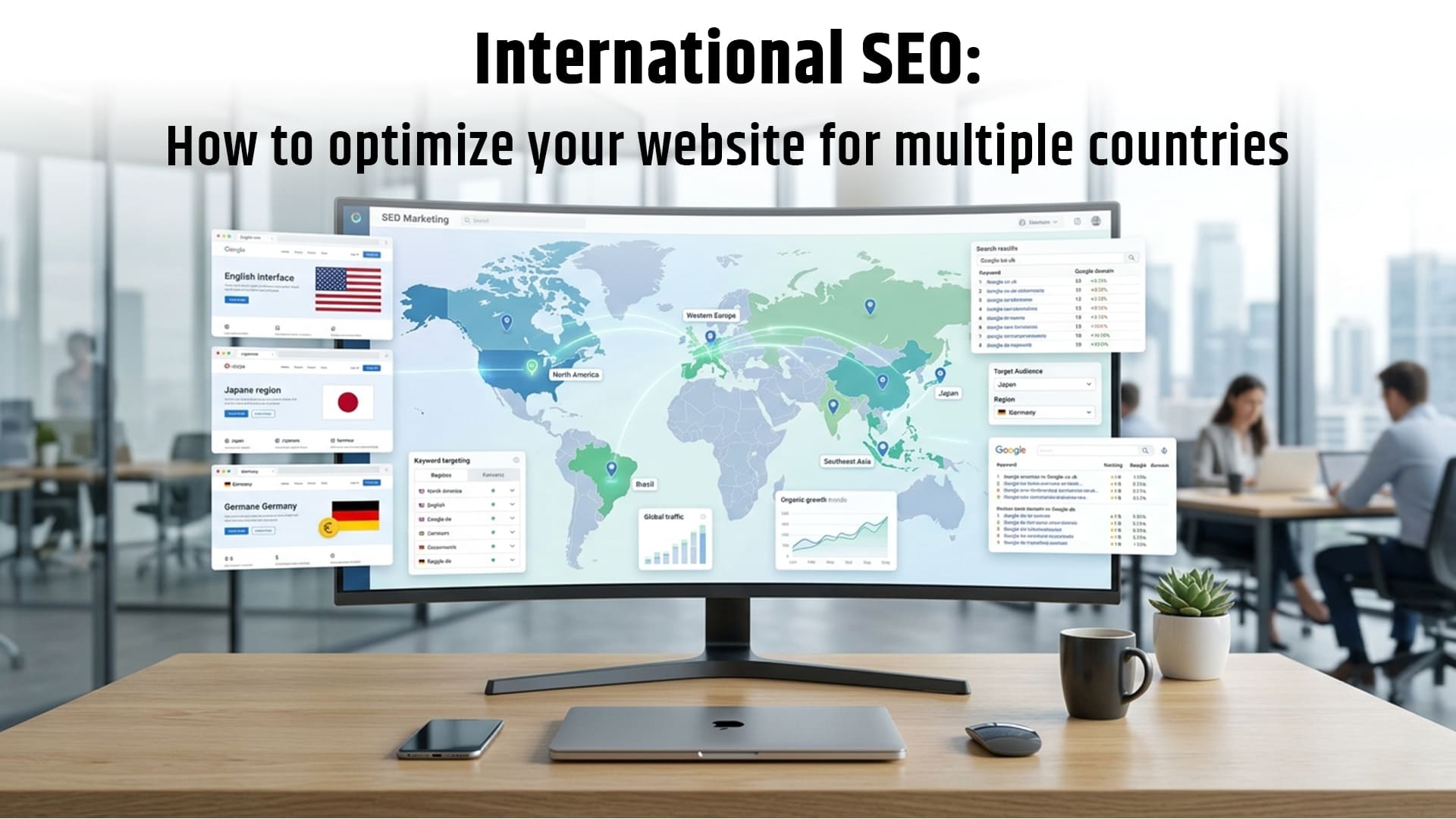
An International SEO strategy is a set of practices that allows a website to rank effectively in multiple countries and languages. It enables region- and language-specific optimization, including URL structures, hreflang tags, content localization, and local authority building, without creating duplicate or irrelevant content. This makes it ideal for businesses, e-commerce sites, and global brands targeting multiple international markets while delivering relevant experiences to each audience.
What is International SEO?
International SEO is the process of optimizing your website so search engines can show the right content to the right audience based on location and language.
There are two types:
- Multiregional SEO: Focuses on countries (e.g., USA, France, Germany).
- Multilingual SEO: Focuses on languages (e.g., English, Spanish, French).
Why it Important: Without international SEO:
- Users may land on irrelevant pages.
- Search engines may treat your pages as duplicates.
- You could lose traffic and sales globally.
How to Structure Your Website for Multiple Countries
Proper URL structure helps search engines understand which content is for which country or language.
1. Country Domains (ccTLDs)
- Description: A country-specific domain shows Google and users that your website is meant for that country.
Example: example.fr or example.de - Pros: Strong signal for that country, helps local search rankings.
- Cons: Expensive to buy and manage multiple domains, and each domain has separate authority, which can make SEO harder.
2. Subdirectories
- Description: A folder on your main website for each country or language.
Example: example.com/fr/ or example.com/de/ - Pros: Easy to manage, keeps all SEO authority in one main domain.
- Cons: Slightly weaker local signal than ccTLDs but still effective.
- Best for: Most businesses that want international SEO without managing multiple domains.
3. Subdomains
- Description: A separate section of your website that acts almost like a new site for each country or language.
Example: fr.example.com - Pros: Clear separation between countries or languages.
- Cons: Google may treat it as a separate website, which can split SEO authority.
4. URL Parameters
- Description: A language or country is indicated by a tag in the URL instead of a folder or subdomain.
Example: example.com?lang=fr - Pros: Quick and easy to set up.
- Cons: Weak signals for Google, not ideal for indexing, and can confuse search engines.
Use Hreflang Tags Correctly
Hreflang tags tell Google which language and country each page is for.
Tips:
- Use correct language and country codes (en-US, fr-FR).
- Make sure every page links back to itself and other versions.
- Helps prevent duplicate content issues.
Do Keyword Research for Each Country
People in different countries use different words to search, even if they speak the same language.
Steps:
- Research keywords for each language/country.
- Check local search intent (informational, commercial, or transactional).
- Use tools like Google Keyword Planner or Ahrefs.
Translate and Localize Your Content
Translation is not enough. You need localization to match culture, habits, and expectations.
- Use local currency, date formats, and measurements.
- Adjust tone and examples for each culture.
- Ensure the content solves problems relevant to that audience.
Technical SEO Checklist
To make international SEO work, ensure:
- Hreflang tags are correct.
- Each region/language has a unique URL.
- Titles, meta descriptions, and structured data are localized.
- Site speed is fast in each country (consider CDNs).
- Navigation works for multiple languages.
Build Local Authority
Google ranks websites higher if they are trusted locally.
How:
- Get backlinks from local websites.
- List your business in local directories.
- Collect reviews in local languages.
Track Your International SEO Performance
- Separate analytics by country and language.
- Monitor search rankings for each region.
- Track engagement and conversions per locale.
- Adjust content and strategy based on data.
Common International SEO Mistakes
- Using translation without localization
- Wrong hreflang implementation
- Not using unique URLs per country/language
- Ignoring local backlinks and authority
- Relying only on global SEO metrics
Conclusion
International SEO is the process of optimizing your website so it ranks in multiple countries and languages. It helps search engines show the right content to the right users based on their location and language.
With the right setup like proper URL structure, hreflang tags, and localized content you can reach global audiences, improve visibility, and grow your organic traffic worldwide.
FAQs
Contact us to get a digital strategy
Contact us for digital strategy guidance.