
LinkedIn is no longer just a platform for job seekers it's one of the most powerful channels for B2B lead generation in 2026. Every day, business owners, decision-makers and professionals use LinkedIn to find trusted suppliers, research companies and build valuable business relationships.
However, generating quality B2B leads takes more than sending connection requests. Success comes from optimising your profile, creating valuable content, targeting the right prospects and building genuine relationships through personalised outreach and consistent follow-ups.
In this guide, you'll learn proven strategies to generate high-quality B2B leads on LinkedIn, attract decision-makers and turn connections into long-term customers.
B2B Lead Generation LinkedIn Overview
B2B (Business-to-Business) lead generation is the process of finding and attracting businesses that may be interested in your products or services.
On LinkedIn, this involves identifying relevant professionals, building relationships, sharing valuable content and encouraging prospects to start conversations.
Instead of targeting individual consumers, B2B lead generation focuses on people such as:
- Business owners
- Managing directors
- CEOs
- Marketing managers
- Procurement managers
- HR directors
- Operations managers
- IT managers
- Finance directors
- Founders
These professionals often influence or make purchasing decisions.
LinkedIn Statistics for 2026
Understanding how professionals use LinkedIn helps shape your lead generation strategy.
Some key trends include:
- More than one billion LinkedIn members worldwide.
- Millions of business professionals log in daily.
- LinkedIn remains the largest professional networking platform.
- B2B marketers consistently rank LinkedIn among their most effective social channels for lead generation.
- Decision-makers increasingly research suppliers before responding to outreach.
- Video, document posts and expert insights continue to attract higher engagement than purely promotional content.
These trends reinforce the importance of building authority rather than focusing only on direct sales.
Understanding the LinkedIn Algorithm in 2026
LinkedIn rewards relevant, helpful and engaging content, not just accounts with large followings. To increase your reach, focus on these four factors:
1. Relevance
Create content that matches your audience's interests and solves their problems.
2. Expertise
Share practical tips, real experiences and original insights to build credibility.
3. Meaningful Engagement
Encourage thoughtful comments, discussions and shares, as these have a greater impact than likes alone.
4. Consistency
Post regularly to stay visible. Aim for 3-5 posts per week, one long-form article each month and engage with your network daily.
Define Your Ideal Customer Profile (ICP)
Before looking for leads, identify your ideal customer. This helps you target the right businesses and improve lead quality.
- Industry: SaaS, Healthcare, Manufacturing, Construction, Retail or Financial Services.
- Company Size: Start-ups, SMEs or Enterprise businesses.
- Job Titles: CEO, Founder, Marketing Director, HR Manager, IT Manager or Operations Director.
- Pain Points: Low-quality leads, poor SEO, low website traffic, weak brand awareness or high customer acquisition costs.
A clear ICP helps you create relevant content and connect with decision-makers who are more likely to become customers.
How to Generate B2B Leads on LinkedIn
Learn proven strategies to generate high-quality B2B leads on LinkedIn by optimising your profile, creating valuable content and building meaningful business relationships.
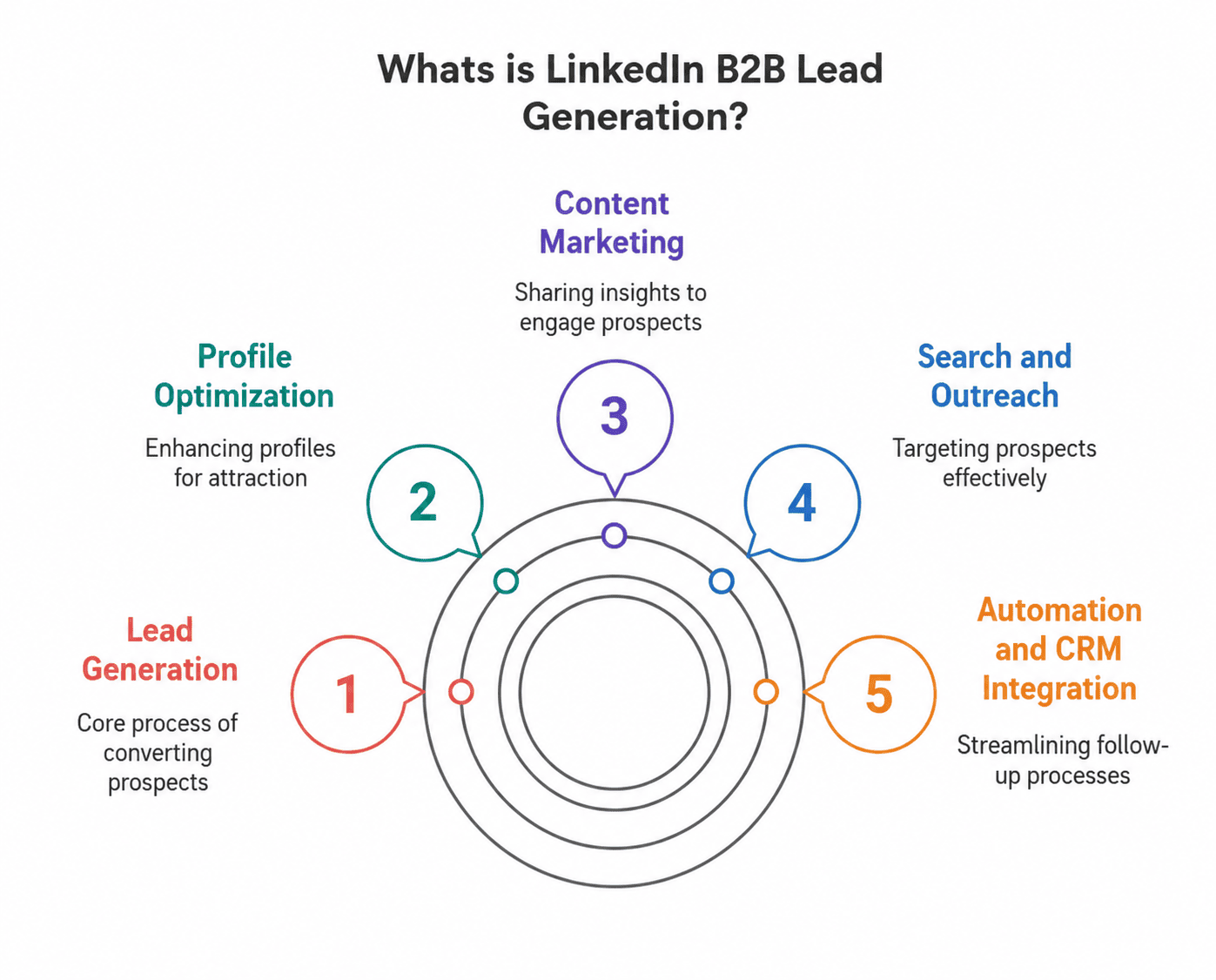
1. Build a High-Converting LinkedIn Profile
Your LinkedIn profile is often the first thing potential clients see. A well-optimised profile builds trust and helps you appear in LinkedIn search results. Think of it as a landing page for your business.
2. Use a Professional Profile Photo
Choose a clear, high-quality headshot with a clean background. A professional photo makes your profile more trustworthy and approachable.
3. Create a Branded Banner
Use your banner to highlight your expertise, services or value proposition. Keep the design simple and include your brand name or website if relevant.
4. Write a Keyword-Optimised Headline
Your headline should explain what you do, who you help and the result you deliver.
Example: B2B SEO Consultant | Helping SaaS Companies Generate More Organic Leads
5. Optimise Your About Section
Keep your About section simple by covering:
- Who you are
- Who you help
- What problems you solve
- Why clients should choose you
- A clear call to action
6. Highlight Your Experience
Don't just list job roles. Show your achievements with measurable results, such as increased traffic, lead generation or successful projects.
7. Add Relevant Skills
Include skills related to your services, such as:
- SEO
- LinkedIn Marketing
- B2B Marketing
- Content Marketing
- Lead Generation
- Digital Marketing
8. Collect Recommendations
Ask clients or colleagues for recommendations that highlight your expertise, professionalism and results. Positive reviews help build credibility.
9. Use the Featured Section
Showcase your best work, including:
- Case studies
- Blog posts
- Customer testimonials
- Videos
- Website
- Lead magnets
10. Customise Your LinkedIn URL
Use a clean and professional profile URL, such as: linkedin.com/in/john-smith-seo
11. Optimise Your Company Page
Complete your company page with a clear description, services, logo, banner, website and regular updates to build trust with potential customers.
Create a LinkedIn Content Strategy
Sharing valuable content consistently helps attract the right audience and positions you as an industry expert. Focus on educating rather than selling.
Choose Your Content Pillars
Create content around 3-5 key topics related to your business, such as:
- SEO Tips
- Content Marketing
- LinkedIn Marketing
- Case Studies
- Industry Trends
This helps LinkedIn understand your expertise and improves your visibility in search results.
Publish Post Consistently
Consistency matters more than frequency. A sustainable schedule could include:
|
Day |
Content |
|
Monday |
Educational post |
|
Tuesday |
Comment on industry discussions |
|
Wednesday |
Case study |
|
Thursday |
Document or carousel |
|
Friday |
Industry insight |
|
Weekend |
Respond to comments and messages |
Regular activity signals expertise to both LinkedIn and your audience.
Convert Leads into Customers
Create resources that solve real business problems, such as:
- SEO Checklists
- Website Audits
- LinkedIn Profile Audits
- Case Studies
- Industry Reports
- ROI Calculators
These resources encourage prospects to engage with your business.
1. Publish LinkedIn Newsletters and Articles
Share educational newsletters, how-to guides, case studies and industry insights to establish authority and stay visible to your audience.
2. Host LinkedIn Live Sessions and Events
Run webinars, Q&A sessions or workshops to demonstrate your expertise, answer questions and build stronger relationships with potential clients.
3. Use LinkedIn Ads
Support your organic strategy with targeted LinkedIn Ads, including Sponsored Content, Lead Generation Forms and Video Ads to reach decision-makers.
4. Nurture Your Leads
Stay connected by regularly sharing helpful content, case studies, newsletters and webinar invitations until prospects are ready to buy.
5. Monitor Performance
Track profile views, engagement, enquiries, lead quality and conversions. Use these insights to optimise your LinkedIn strategy over time.
6. Stay Consistent
Success on LinkedIn comes from consistency. Publish valuable content, engage with your audience, build relationships and refine your approach based on results.
Common Mistakes That Limit Results
Avoid these common issues:
- Posting only promotional content.
- Ignoring comments and messages.
- Connecting with people outside your target audience.
- Publishing inconsistently.
- Failing to optimise your profile.
- Using generic AI-generated content without editing.
- Neglecting follow-up.
- Measuring likes instead of business outcomes.
A balanced strategy focused on expertise, relationships and consistent value is more sustainable than chasing short-term engagement.
Conclusion
LinkedIn has become one of the most effective platforms for B2B lead generation in 2026. Success comes from having an optimised profile, understanding your ideal customers, sharing valuable content, engaging with the right people and building genuine relationships.
Instead of focusing on quick sales, aim to provide useful insights and demonstrate your expertise. With a consistent strategy and regular optimisation, LinkedIn can help you attract high-quality B2B leads and support long-term business growth.
Frequently Asked Questions
Contact us to get a digital strategy
Contact us for digital strategy guidance.