
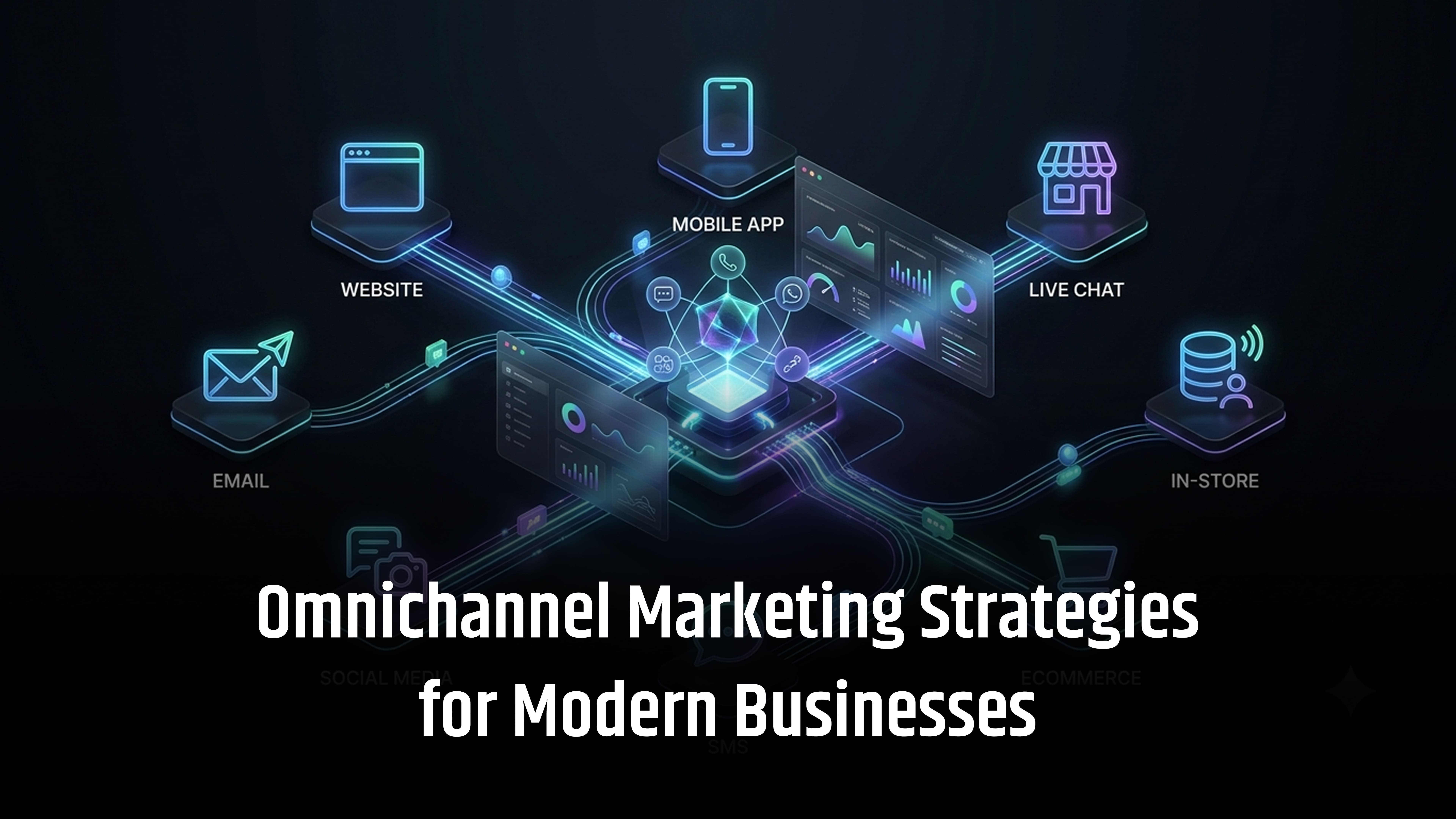
Customer behaviour has changed significantly, and people now interact with brands across multiple channels before making a decision. A customer may discover a product through Google Search, compare options on a website, read reviews on social media, receive an email, and complete a purchase through a mobile app or physical store. Customers expect these interactions to feel connected, consistent, and convenient.
Omnichannel marketing helps businesses create a unified customer experience by connecting channels such as websites, mobile apps, email, social media, online advertising, physical stores, and customer support.
In 2026, businesses are using technologies like AI, CRM systems, automation, and customer data platforms to better understand customer needs, personalise communication, and build stronger long-term relationships.
What is Omnichannel Marketing?
Omnichannel marketing is a strategy that connects all customer touchpoints, including websites, apps, social media, email, stores, and support channels, to create a seamless and personalised customer experience.
It uses integrated data and technology to help businesses understand customer behaviour, improve engagement, and build stronger relationships across the entire customer journey.
How Omnichannel Marketing Works
Omnichannel marketing works by combining customer data, technology, and communication channels.
1. Customer Data Integration
Businesses collect data from websites, purchases, apps, emails, stores, and customer support interactions to understand customer behaviour and create a complete customer profile.
2. Connected Marketing Channels
All channels work together instead of separately. For example, a customer may view a product online, receive a personalised email, get app recommendations, and receive support based on previous interactions.
3. Personalised Customer Experience
Businesses use customer insights to provide relevant experiences, such as product recommendations, targeted emails, location-based offers, and useful content.
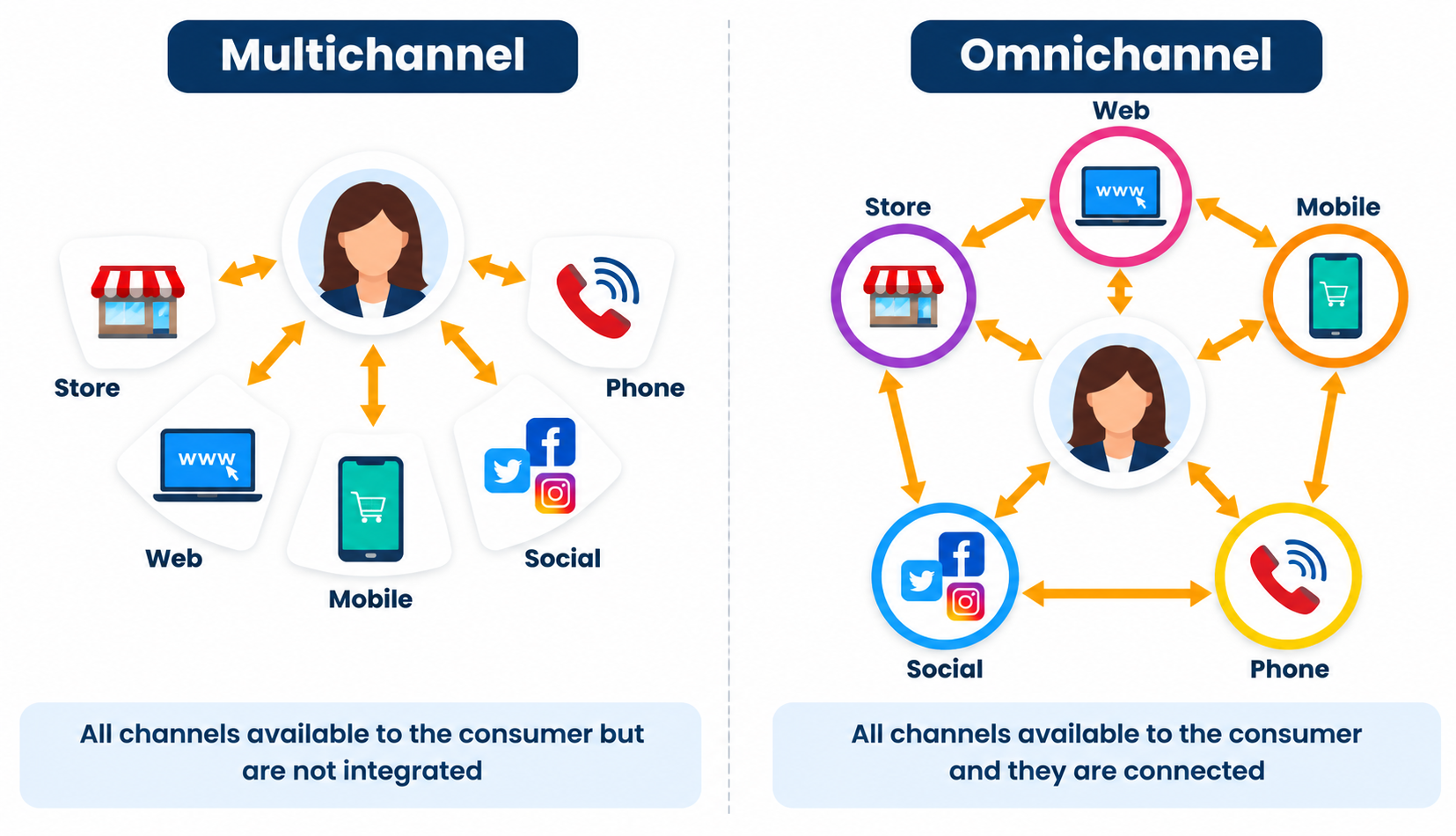
Omnichannel vs Multichannel Marketing Comparison
A comparison of how omnichannel and multichannel marketing differ in terms of customer experience, channel integration, data sharing, and business approach.
|
Factor |
Multichannel Marketing |
Omnichannel Marketing |
|
Main focus |
Using multiple channels |
Creating a connected customer journey |
|
Customer experience |
Different across channels |
Consistent across channels |
|
Data sharing |
Limited or separate |
Integrated customer data |
|
Communication |
Brand-focused |
Customer-focused |
|
Personalisation |
Basic targeting |
Advanced personalisation |
|
Technology |
Separate systems |
Connected systems |
|
Customer journey |
Channel-based |
Experience-based |
Omnichannel Marketing Strategies for Modern Businesses
A successful omnichannel marketing strategy requires more than creating accounts on different platforms. Businesses need to connect channels, understand customer behaviour, and provide consistent experiences.
The following strategies can help businesses build an effective omnichannel approach in 2026.
1. Create a Complete Customer Journey Map
The first step in omnichannel marketing is understanding how customers interact with a business. A customer journey map shows every stage of the customer experience.
Awareness
Customers discover a business through:
- Google Search
- Social media
- Online advertising
- Recommendations
- Content marketing
At this stage, businesses should provide useful information that helps customers understand their problems and possible solutions.
Consideration
Customers research before making decisions.
They may:
- Compare products
- Read reviews
- Watch videos
- Visit websites
- Contact businesses
Businesses should ensure that information is accurate and consistent across every channel.
Purchase
Customers expect simple buying experiences.
A strong omnichannel purchase journey may include:
- Online checkout
- Mobile payment
- Store collection
- Order tracking
- Flexible delivery options
Retention
The relationship should continue after the purchase.
Businesses can improve retention through:
- Loyalty programmes
- Helpful emails
- Customer support
- Personalised recommendations
- Exclusive offers
2. Integrate Customer Data Using CRM and CDP Systems
Customer data is the foundation of omnichannel marketing. When data is stored separately, businesses struggle to understand customer behaviour.
For Example: A customer may contact support after purchasing a product online. If the support team cannot access purchase information, the customer experience becomes frustrating.
Businesses use technologies such as:
- Customer Relationship Management (CRM) systems
- Customer Data Platforms (CDPs)
- Marketing automation tools
- Analytics platforms
to create a complete customer profile.
Popular platforms include:
- Salesforce
- HubSpot
- Microsoft Dynamics 365
These systems help businesses manage:
- Customer conversations
- Purchase history
- Marketing preferences
- Support requests
- Customer interactions
3. Provide Personalised Customer Experiences
Personalisation is one of the most important parts of modern omnichannel marketing. Customers expect businesses to provide relevant experiences based on their interests and previous interactions.
Examples include:
Personalised Product Recommendations
Online stores can recommend products based on:
- Previous purchases
- Browsing behaviour
- Search activity
- Customer preferences
Targeted Email Communication
Instead of sending the same email to everyone, businesses can send messages based on customer behaviour.
Examples:
- Welcome emails
- Product updates
- Abandoned basket reminders
- Loyalty rewards
Personalised Website Experiences
Businesses can adjust website experiences based on customer needs.
Examples:
- Recommended products
- Relevant content
- Location-based information
4. Connect Online and Offline Channels
A major advantage of omnichannel marketing is combining digital and physical experiences. This is especially important for retail businesses.
Examples include:
Buy Online, Pick Up In Store (BOPIS)
Customers can:
- Browse products online.
- Purchase through a website or app.
- Collect from a physical location.
This provides convenience and encourages store visits.
In-Store Digital Experiences
Businesses can improve physical shopping through:
- QR codes
- Digital product information
- Mobile payments
- Customer accounts
- Loyalty apps
Unified Customer Accounts
A customer account can connect:
- Online purchases
- Store purchases
- Rewards
- Preferences
This creates a smoother experience.
5. Use Artificial Intelligence and Automation
Artificial intelligence has become an important part of omnichannel marketing strategies in 2026. AI helps businesses understand customer behaviour and automate communication.
Common uses include:
AI-Based Recommendations
AI can analyse customer activity and suggest relevant products or content.
Automated Customer Support
AI chatbots can help customers with:
- Common questions
- Order tracking
- Product information
- Basic support requests
Human support remains important for complex issues.
Predictive Analytics
AI can identify patterns and help businesses predict:
- Customer needs
- Buying behaviour
- Churn risks
- Future trends
6. Maintain Consistent Brand Communication
Consistency builds customer trust.
Businesses should maintain the same:
- Brand message
- Product information
- Visual identity
- Customer service standards
across all channels.
For example, if a promotion appears on social media but is unavailable on the website or in-store, it creates confusion and reduces trust.
7. Optimise Mobile Customer Experiences
Mobile devices are a major part of modern customer journeys.
Businesses should focus on:
- Mobile-friendly websites
- Fast page loading
- Easy checkout processes
- Mobile applications
- Digital payments
- Push notifications
A poor mobile experience can negatively affect customer engagement.
Omnichannel Marketing Use Cases
Omnichannel marketing helps businesses create connected customer experiences across digital and offline channels. It allows customers to move smoothly between websites, apps, stores, email, social media, and support platforms.
1. Retail
Retail businesses use omnichannel marketing to connect online shopping with physical stores.
Common channels:
- E-commerce websites
- Mobile apps
- Loyalty programmes
- Email marketing
- SMS notifications
- In-store experiences
Example: A customer views a product online, receives a reminder email, visits a store to check availability, and completes the purchase while earning loyalty points.
2. E-commerce
E-commerce brands use omnichannel strategies to improve shopping experiences from discovery to delivery.
Common channels:
- Product recommendations
- Email campaigns
- Live chat
- Mobile checkout
- Order tracking
- Social media
Example: A customer receives personalised product suggestions, completes a purchase online, and tracks delivery through a mobile app.
3. Banking and Financial Services
Banks use omnichannel marketing to provide connected services across digital and physical platforms.
Common channels:
- Mobile banking apps
- Websites
- Branches
- Phone support
- Live chat
Example: A customer starts a loan application online and continues the process at a branch without repeating information.
4. Healthcare
Healthcare organisations use omnichannel communication to improve patient experiences.
Common channels:
- Online booking
- Patient portals
- Mobile apps
- Email reminders
- Telehealth services
Example: A patient books an appointment online, receives reminders by email or SMS, and accesses medical updates through a secure portal.
5. B2B Businesses
B2B companies use omnichannel marketing to support longer customer decision journeys.
Common channels:
- Search engines
- Blogs
- Webinars
- Sales consultations
Example: A business downloads a guide, attends a webinar, speaks with sales, and receives personalised follow-up communication through a CRM system.
Conclusion
Omnichannel marketing is no longer just a trend it has become an essential strategy for businesses that want to meet changing customer expectations.
Customers interact with brands across websites, mobile apps, search engines, social media, email, physical stores, and customer support channels. They expect these interactions to feel connected, consistent, and personalised.
A successful omnichannel marketing strategy focuses on the customer rather than individual channels. By integrating technology, customer data, and communication platforms, businesses can create seamless experiences that improve engagement, strengthen customer loyalty, and encourage repeat business.
As technology continues to evolve in 2026, artificial intelligence, first-party data, marketing automation, and predictive analytics are making omnichannel marketing more effective than ever. However, technology alone is not enough. Businesses must also prioritise transparency, privacy, and genuinely helpful customer experiences.
Whether you operate a small business, an e-commerce store, or a large organisation, investing in an omnichannel approach can help you build stronger customer relationships and remain competitive in an increasingly connected digital world.
Frequently Asked Questions
- Websites
- Mobile apps
- Email marketing
- Social media
- Search engines
- Physical stores
- SMS
- Live chat
- Customer support
- Online advertising
Contact us to get a digital strategy
Contact us for digital strategy guidance.