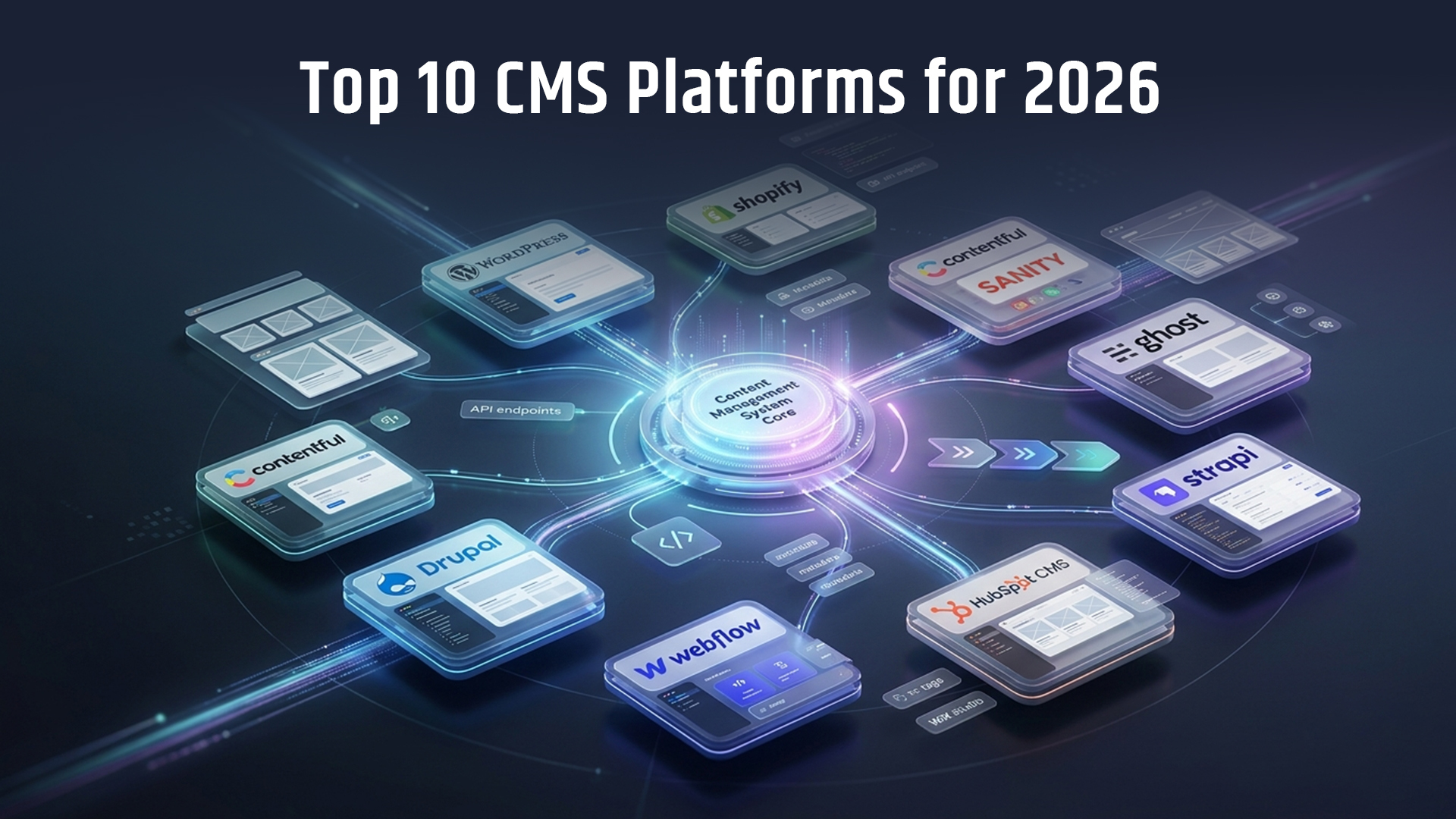
To choose the best CMS platform for 2026, you need to understand your website goals, such as blogging, e-commerce, or business growth, and select a platform that matches your needs. Popular options like WordPress, Shopify, and Webflow offer different features for different users.
A good CMS should be easy to use, SEO-friendly, fast, and scalable. You should also consider whether you need a traditional CMS or a modern headless CMS like Contentful or Sanity. The best results come from choosing a platform that balances performance, flexibility, and long-term growth.
In this blog, we will explore the top 10 CMS platforms for 2026, compare their features, explain which CMS is best for SEO, beginners, and businesses, and help you choose the right platform to build a fast, high-ranking, and successful website.
What is a CMS?
A Content Management System (CMS) is software that helps you create and manage a website without coding. It allows you to add pages, write content, and update your site easily.
You can:
- Write blog posts
- Add images and pages
- Manage products (for online stores)
- Improve SEO (search rankings)
Why CMS Platforms Important in 2026
CMS platforms are important because:
- Websites need fast loading speed
- Google uses AI search and structured data
- Businesses need content on websites, apps, and social media
- SEO is more competitive than before
So choosing the right CMS helps you rank higher on Google.
Top 10 CMS Platforms for 2026
Here are the Top 10 CMS Platforms for 2026 that help you build fast, SEO-friendly, and scalable websites
1. WordPress (Best Overall CMS)
WordPress is the most popular CMS in the world.
Why it is best:
- Easy to use for beginners
- Many themes and plugins
- Strong SEO tools (Yoast SEO, Rank Math)
- Good for blogs and business websites
Best for: Blogs, small business websites, SEO websites
2. Contentful (Best for Big Companies)
Contentful is a headless CMS used by large businesses.
Features:
- Fast API-based system
- Works on websites, apps, and more
- Easy content scaling
Best for: Enterprise websites
3. Sanity (Best for Developers)
Sanity is a flexible CMS for developers.
Features:
- Real-time editing
- Fully customizable structure
- Works with modern frameworks
Best for: Developer teams and SaaS products
4. Webflow (Best Visual CMS)
Webflow is a design-based CMS.
Features:
- Drag-and-drop design
- No coding needed
- Clean SEO-friendly code
Best for: Designers and agencies
5. Shopify (Best for Online Stores)
Shopify is the top CMS for e-commerce.
Features:
- Easy online store setup
- Secure payments
- Inventory management
Best for: E-commerce businesses
6. Drupal (Best for Security)
Drupal is a powerful CMS for large systems.
Features:
- Very secure
- Highly customizable
- Handles large traffic
Best for: Government and enterprise websites
7. Strapi (Best Open Source Headless CMS)
Strapi is an open-source CMS.
Features:
- Full control of data
- API-first system
- Developer-friendly
Best for: Developers who want control
8. Wix Studio (Best for Beginners)
Wix Studio is an easy website builder.
Features:
- Drag-and-drop builder
- AI tools
- Hosting included
Best for: Small businesses and beginners
9. HubSpot CMS (Best for Marketing)
HubSpot CMS Hub is built for marketing teams.
Features:
- CRM integration
- Email marketing tools
- Personalization features
Best for: Marketing websites
10. Ghost (Best for Blogging)
Ghost is a simple CMS for writers.
Features:
- Fast and lightweight
- Subscription and newsletter support
- Clean writing experience
Best for: Bloggers and publishers
Pros and Cons of Top CMS Platforms (2026)
Here we explain the pros and cons of the top 10 CMS platforms for 2026, helping you understand their strengths, limitations, and which one is best for your website needs.
|
CMS Platform |
Pros |
Cons |
|
WordPress |
Easy to use, SEO-friendly, many plugins |
Needs updates, can slow with too many plugins |
|
Contentful |
Scalable, fast API, great for enterprise |
Expensive, needs developers |
|
Sanity |
Flexible, real-time editing, modern |
Not beginner-friendly |
|
Webflow |
Visual builder, clean code, no coding needed |
Limited scalability |
|
Shopify |
Best for e-commerce, secure, easy setup |
Monthly cost, limited customization |
|
Drupal |
Very secure, powerful, scalable |
Hard to learn |
|
Strapi |
Open-source, flexible, full control |
Requires technical skills |
|
Wix Studio |
Beginner-friendly, quick setup, AI tools |
Less flexibility |
|
HubSpot CMS Hub |
Marketing tools, CRM integration |
Expensive |
|
Ghost |
Fast, simple, great for blogging |
Limited features |
Which CMS is Best in 2026?
Here is a simple answer:
- Best overall: WordPress
- Best for e-commerce: Shopify
- Best for enterprise: Contentful
- Best for developers: Sanity
- Best for beginners: Wix Studio
- Best for blogging: Ghost
Conclusion
A CMS is the foundation of your website that helps you create, manage, and optimize content without coding. Choosing the right CMS platform in 2026 ensures your website is fast, SEO-friendly, and ready for modern search trends.
With the right CMS whether it’s WordPress for flexibility, Shopify for ecommerce, or Contentful for scalability you can improve your website performance, reach a wider audience, and grow your online presence effectively.
FAQs
Contact us to get a digital strategy
Contact us for digital strategy guidance.